There's a sound that defined a whole genre: a squelchy, rubbery bass line that seems to talk. In the mid-1980s, a few Chicago producers turned the resonance up on a Roland TB-303 bass machine and twisted its filter while it played, and acid house was born. The "talking" isn't a special effect. It's one filter, moving.
Try it below. A plain saw bass line runs through a low-pass filter with the resonance already high. Move Cutoff slowly from low to high. Before you do, predict: will the sound get smoothly brighter, or will you hear something like a little melody whistling inside the notes?
Sweep Cutoff slowly with Resonance high. Is the change smooth, or does it step through little whistled notes?
The melody inside the note
The melody was already in the note
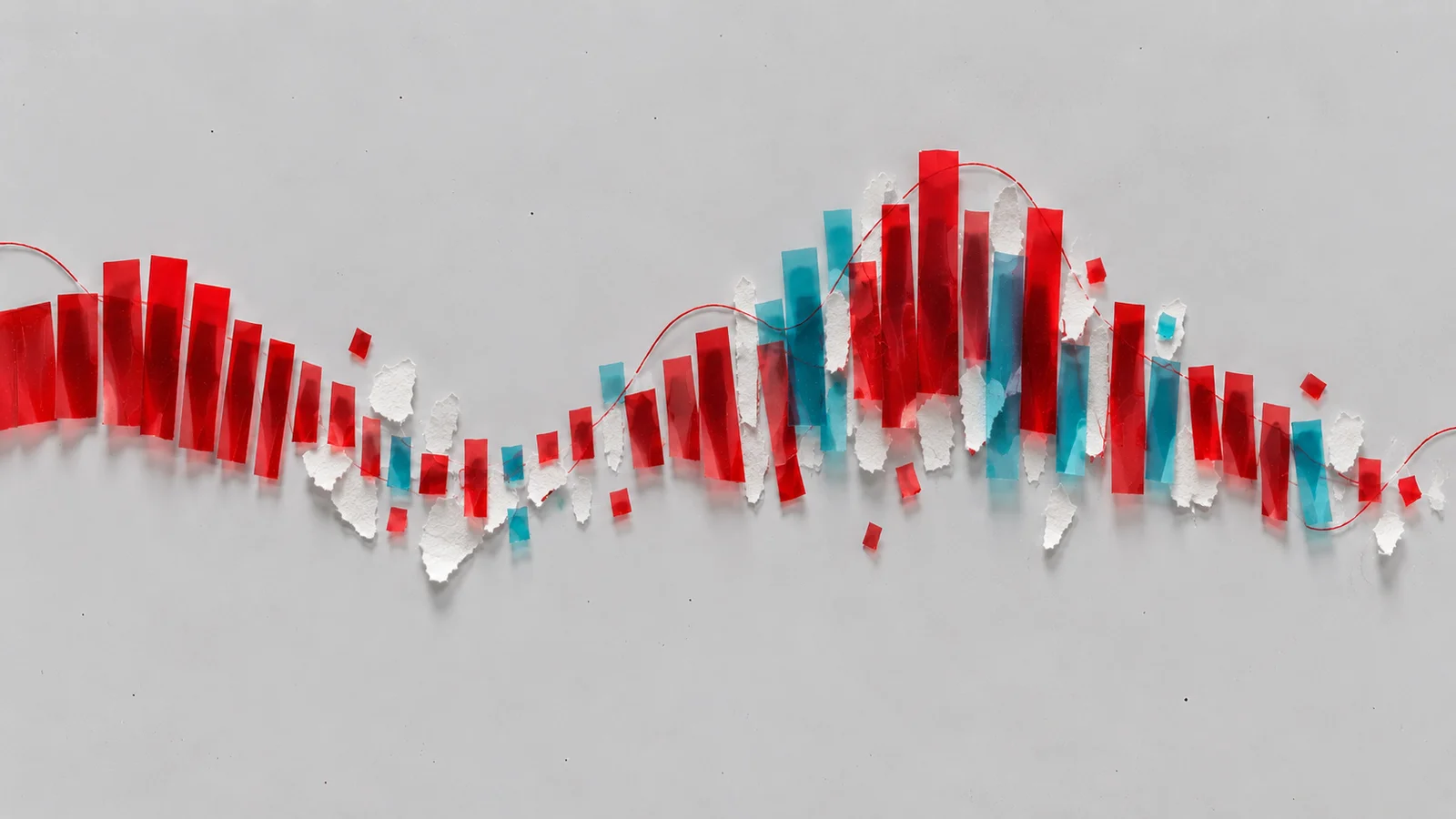
A bright, buzzy note like a saw isn't one frequency. It's a stack: the note you hear (the fundamental) plus harmonics at two, three, four times its frequency and upward, each a little quieter.
Inside one saw note
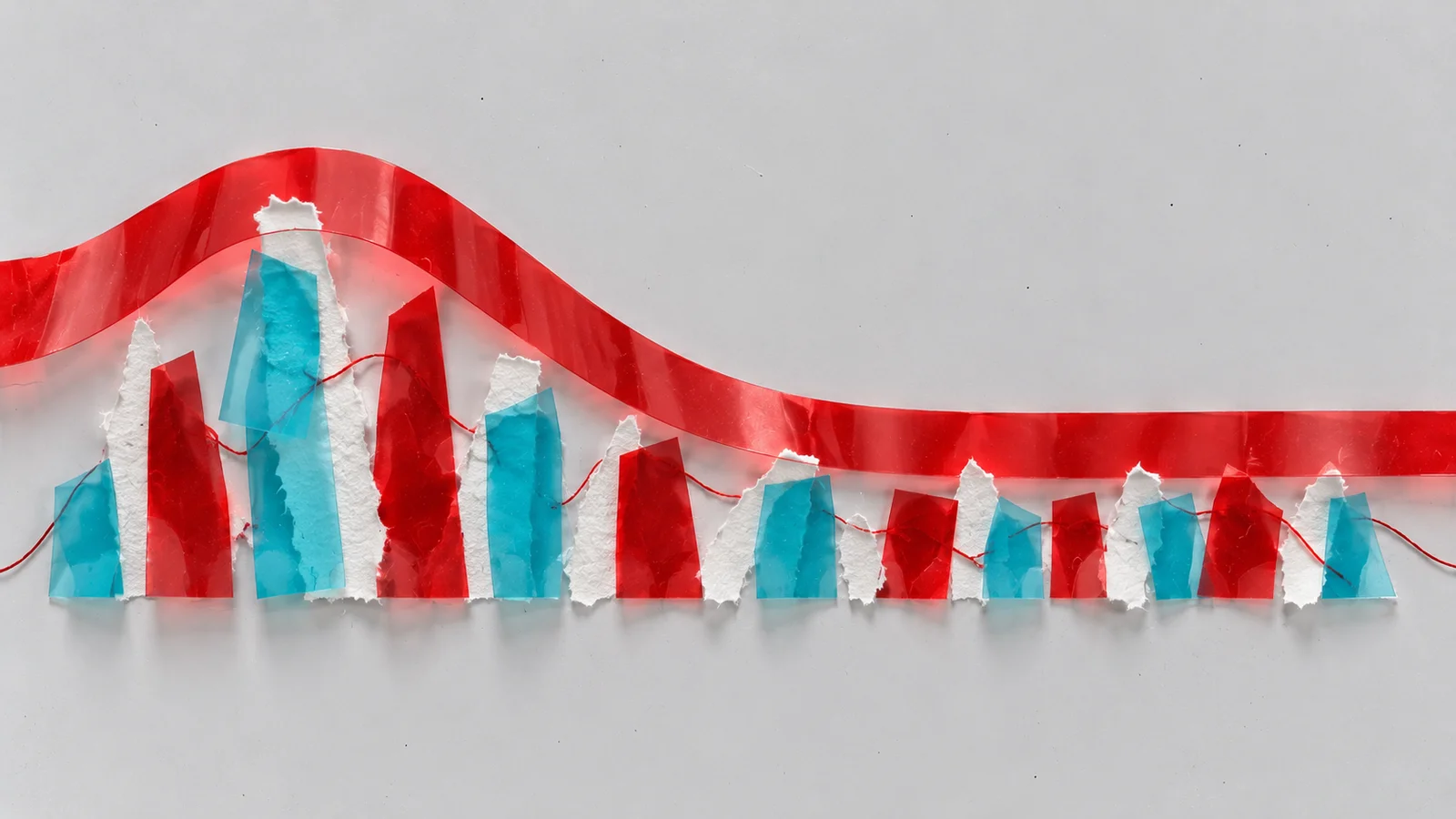
A low-pass filter lets the lows through and turns down everything above its cutoff. Resonance adds a sharp peak right at the cutoff. As you sweep, that peak passes over harmonic after harmonic, and each one rings out as it's crossed. Those harmonics are spaced like the notes of a natural bugle call: an octave, then a fifth, then a fourth, getting closer together as they rise. So a smooth knob movement plays a stepped melody, and that melody belongs to the note.
A resonant low-pass
Now picture the same sweep on a pure sine, a sound with only one bar in that chart. There's nothing for the peak to reveal. The note gets louder as the cutoff passes it, then fades, but no melody. The filter can only highlight what the sound already contains, which is why synth players start from bright, harmonic-rich waves.
Four shapes, four gestures
Filter names say what they let through:
- Low-pass keeps the lows. Closing it is the sound of a party heard through a wall, then the door opening.
- High-pass keeps the highs. Raising it thins a drum loop until only the hats are left, the classic DJ build-up before the drop.
- Band-pass keeps a band in the middle. Moving it sounds like a voice on an old telephone walking up and down.
- Notch removes a band and keeps both sides, a hollow that slides through the sound.
Switch the lab's source to the keys and sweep again. Chords have more harmonics, more tightly packed, so the sweep is less of a melody and more of a shimmer.
How much resonance?
Resonance is sometimes labelled Q. More resonance means a sharper, louder peak. On a harmonic sound it makes the sweep sing; on a noisy sound it pulls a whistle out of the hiss.
Turn it up in small steps and keep your listening level comfortable, because the peak can jump in level when it lands on a strong harmonic, especially on low notes.
Our take: find the sweep range with moderate resonance first, then decide how much bite you want. An acid line wants a lot. A pad that slowly opens into a chorus wants very little, or every harmonic it crosses will steal attention.
Three ways to move a filter
The sound of a filter is mostly in how it moves. There are three classic ways to move it, and each one feels different to play.
By hand. You turn the knob, and the filter follows your timing: opening into a chorus, closing at the end of a phrase. That's every acid line, and every DJ's filter sweep.
By note. A filter envelope opens the filter each time a note starts, then closes it over time. Every note gets the same "bwow" shape. That's the plucky, snappy synth bass of a thousand records, and it's covered in Envelopes.
By how hard you play. An envelope follower listens to the level of the incoming sound and moves the filter with it. Play harder, it opens further. That's an auto-wah, or envelope filter, and it's the sound of funk: the clavinet on Stevie Wonder's "Higher Ground" quacks through one.
A wah is a resonant filter on a pedal
The wah pedal arrived in the 1960s, and its sound is often compared to a trumpet player opening and closing a mute over the bell; the first ones were even sold under the name of the trumpeter Clyde McCoy. Rock players heard something else in it: Jimi Hendrix's "Voodoo Child (Slight Return)" opens with it, and the "wakka-wakka" rhythm guitar on Isaac Hayes's "Theme from Shaft" made it the sound of 1970s soul. It's a resonant filter whose frequency follows your foot.
An auto-wah replaces the foot with your playing. Try it on guitar:
Set it so the loud strums say wah and the quiet ones barely move. What does Sensitivity change?
Let the accents open the filter
Electric Guitar: Andy G. Cohen, CC BY
Sensitivity sets how readily the filter opens: the lower the value (further below zero), the more a quiet note moves it. Octaves sets how far it can travel. Q is the resonance again. Aim for loud notes that say "wah" and quiet ones that only murmur, so the performance stays in charge. Switch to the drum loop and the hits open the filter while the gaps close it.
Where the gesture stops responding
An envelope follower needs something to follow. A heavily compressed part or a long, even pad barely changes level, so the auto-wah barely moves, or you turn it up until it sits wide open. More Q won't help; it only sharpens the peak. Use a more dynamic part, or move the filter by hand or by note instead.
The opposite failure: so much range that every note leaps to the top of the sweep. It's exciting for four bars and tiring for a verse. Pull back Octaves so loud and quiet notes land in different places.
Same idea, different place: Subtractive synthesis puts this exact resonant filter inside the synth, moved by notes and envelopes instead of by the input. Same filter, different hand on the knob.
Make it yours
Pick a new phrase, your own bass line or keys, and give the filter a job before you touch it: accents that answer the drums, a slow opening into a chorus, or a talking line over a groove. Choose the movement that suits the job: your playing (auto-wah), each note (envelope), or your hand (a manual sweep).
Check a quiet note, a loud note and the lowest note. Then open Auto Wah from the lab above and save the setting with a name that describes the gesture, like "opens on accents". A name like that will still mean something in six months.
Quick check
- The same resonant sweep sings on a saw and does almost nothing on a sine. Why? The saw is full of harmonics for the resonant peak to light up one by one. A sine has only one frequency, so there's nothing for the peak to reveal.
- Your auto-wah barely moves on a smooth, sustained pad. Should you raise Q? No. Q sharpens the peak, but the problem is that the pad's level hardly changes, so the follower has nothing to follow. Use a more dynamic part, or move the filter by hand or with an envelope.
- You want every bass note to start bright and close quickly, identically, however hard it's played. Follower or note envelope? A note envelope. It runs the same shape on every note. A follower would open more on loud notes and less on quiet ones.
Next steps
- Use it: LFOs and modulation. Use rate and depth to turn a filter sweep into a repeating gesture.
- Go deeper: Compression. The auto-wah listened to the input's level. What happens when a device listens to level and turns the sound down?