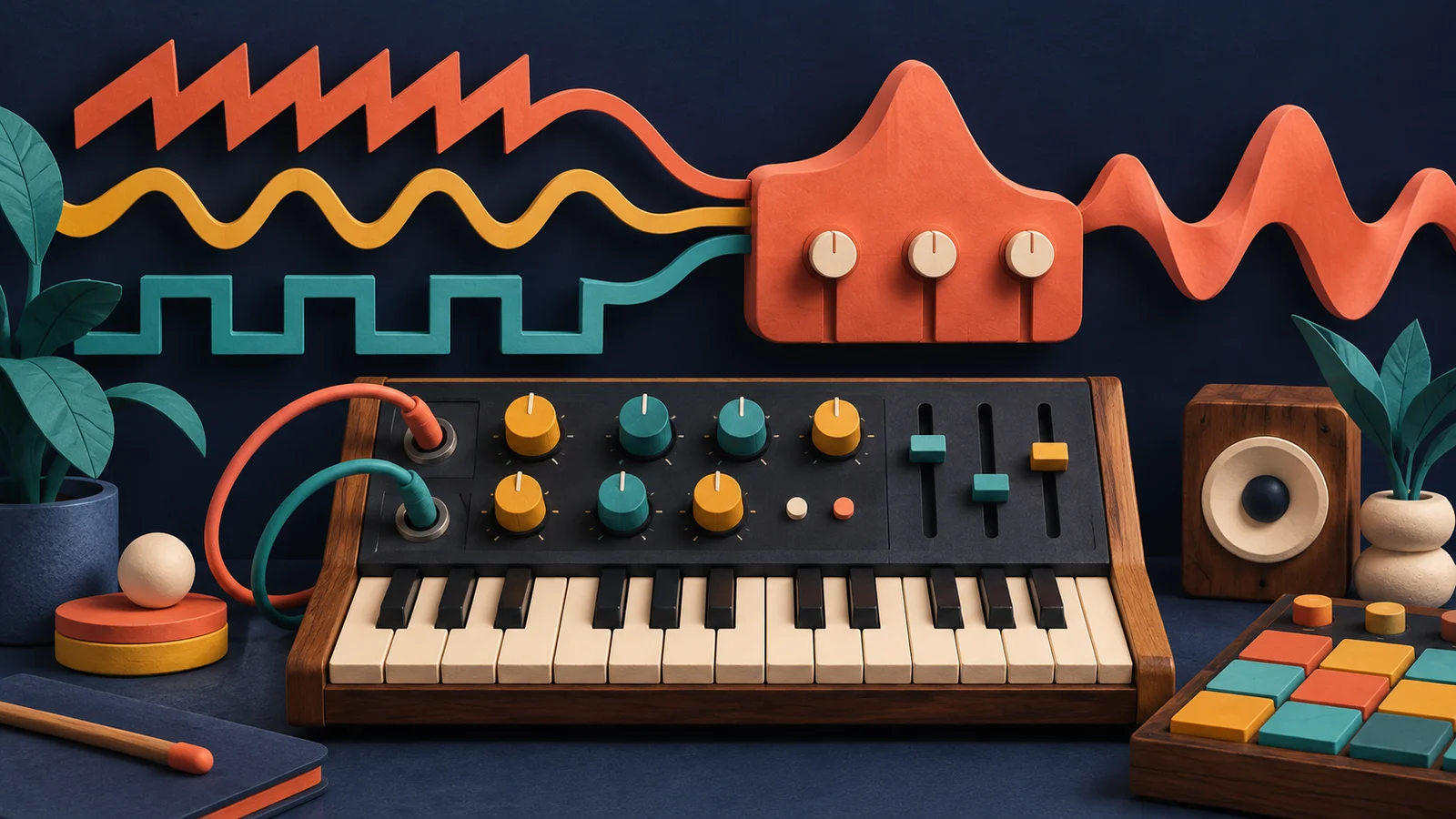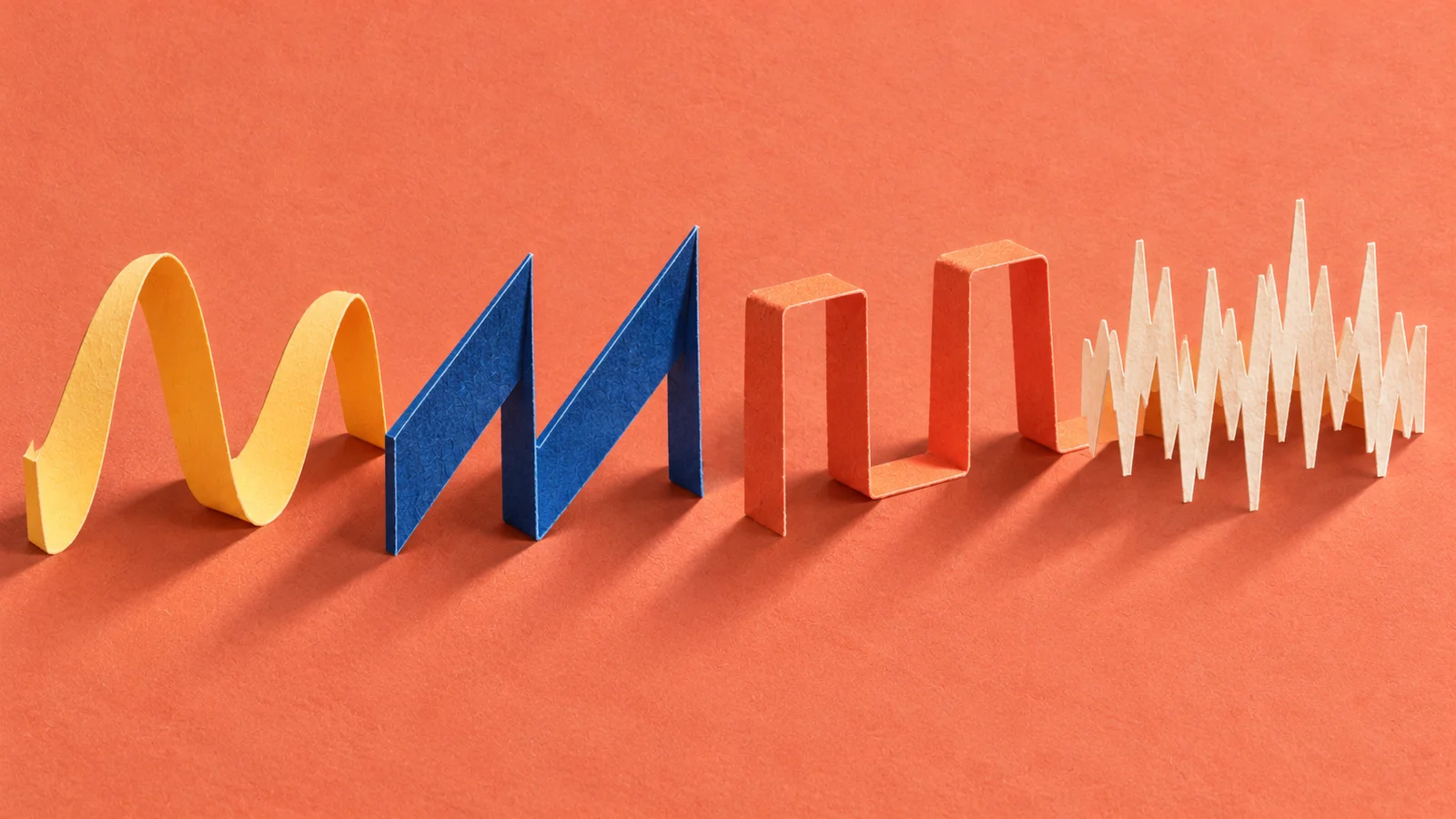
The synth below plays one plain triangle wave. Press Short and Long: it sounds like something struck, a little like a mallet on wood. Now set Attack to zero, Sustain to full and Release to almost nothing, and play the long note. It's an organ. Finally, push Attack to a second and Release to two: the note swells in and lingers, the way a bowed string or a choir enters.
Same oscillator, same pitch, same filter. Before you try it: if only the volume's shape changes, will you still hear the same instrument, played differently? Or a different action making the sound?
Turn the pluck into an organ, then into a swell. Which control changes the character most?
One tone, three actions
What just happened?
Your ear doesn't only listen to the colour of a sound. It listens to how the sound moves through time, and it uses that to guess what made it. A sudden start that fades away means something hit or plucked: a mallet, a string, a drum. A sound that stays exactly level while held and stops dead means a machine, like an organ, where air or a tonewheel is switched on and off. A sound that grows means something is being fed energy gradually: a bow, a breath.
None of these were convincing replicas of a real marimba or violin. Real instruments change their colour and noise as they go too. But the gesture was enough for your brain to file the same triangle wave under three different actions. That shape is called an envelope.
Four stages, one note
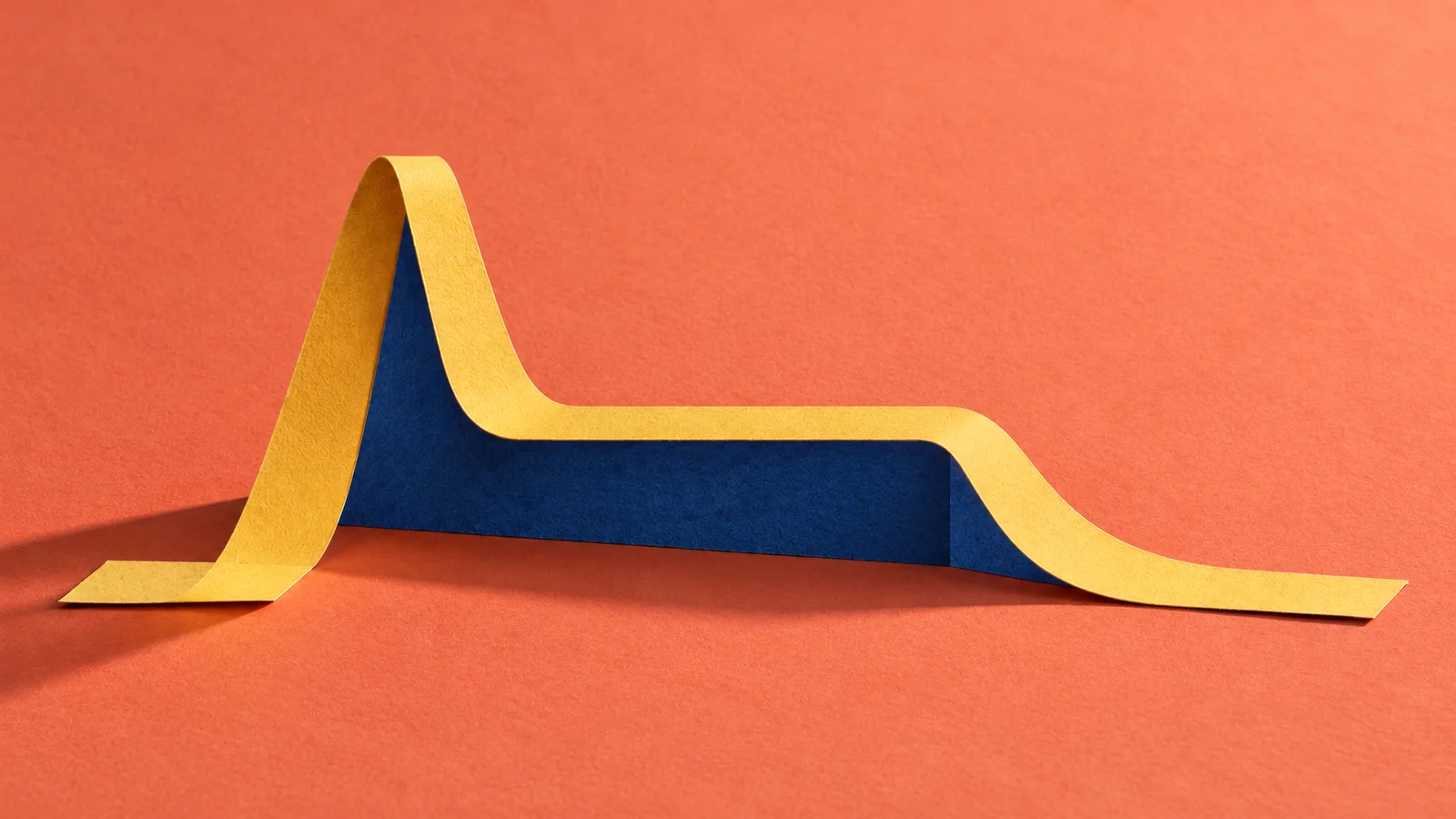
Most synths describe a note's volume with four stages, shortened to ADSR. The idea goes back to the mid-1960s, when the composer Vladimir Ussachevsky is credited with specifying a four-stage envelope for Robert Moog's modular synthesizers, and it has been on nearly every synth since.
| Stage | What happens | What you set |
|---|---|---|
| Attack | The level rises from silence when the key goes down | A time |
| Decay | The level falls from that peak toward the sustain level | A time |
| Sustain | The level stays here for as long as you hold the key | A level |
| Release | The level falls to silence after you let go | A time |
Notice that Sustain sets a level, while the other three controls set times.
Sustain is a place to stay, not a length
Turning Sustain up doesn't make a note last longer. It makes a held note louder. Sustain is a level, the height of a ledge the note settles on after its attack and decay. How long it stays on that ledge is up to your finger.
Sustain is a level
In the lab, the pluck had Sustain at zero. Press Long: even though you hold the key for a second and a half, the note has already died. That's exactly how a piano behaves. Hold a piano key down and the note still fades, because once the hammer has struck, nothing keeps feeding the string. The organ is the opposite: full sustain, so the note holds as long as the key does, and stops as soon as you let go.
So when a pluck feels too short, don't reach for Sustain. Lengthen Decay. When a note stops too abruptly after you let go, lengthen Release.
Short notes skip stages
Play the swell with the Short button. You'll barely hear it. With a one-second attack and a 0.15-second note, the key comes up long before the note reaches full level, and the release starts from wherever the level happened to be.
This matters in real parts. A pad with a slow attack sounds gorgeous on long chords and nearly silent on a quick rhythm. If a sound vanishes when you play it fast, check its attack before you turn it up.
Brightness can have a shape too
An envelope is a shape over time; it can steer any setting, not only volume. Send it to a filter and the note gets brighter at the start and darker as it fades, which is what most acoustic instruments do naturally: a plucked string is brightest the instant it's plucked.
On this synth one envelope does both jobs. Env Amt says how far that same shape opens the filter. Turn it up in the stab lab below and every note gets a bright edge on the way in.
Where it breaks
The release that ate the groove. Play a short chord rhythm and keep lengthening Release. At some point each chord is still ringing when the next one starts. On slow music that overlap is a lush bed. On a busy part it fills every gap, and gaps are what make rhythm. If a part sounds muddy only when it gets busy, shorten the release before you reach for an EQ.
The click at the edges. Set Release to zero and play the long note. Listen right at the end. You may hear a tiny tick, because the wave is chopped off mid-swing instead of easing out. The same can happen with a zero attack on a low note. A few milliseconds of attack and release are usually enough to remove it without softening the note. The same tick haunts samples that are trimmed too tightly, which is why Preparing samples adds tiny fades.
The release with nothing left. A long release can't extend a sound that has already ended. If a sample or a plucked tone runs out before the key comes up, there's nothing left for the release to fade.
Same idea, different place: a compressor has an attack and a release too, and they do a related job on audio that's already been played: how fast the compressor grabs a loud hit and how fast it lets go. Slow attack lets a drum's snap through; fast release lets the room ring back up. See Compression, where you reshape the envelope of a whole drum kit.
Make it yours: turn a pad into a stab
Here's a saw pad: slow in, held, slow out. Your job is to turn it into a short, rhythmic stab you could play on the offbeats of a house track, using only the envelope.
Using only the envelope, can you make this pad punch on a short note and still sound like the same instrument?
Pad into stab
Bring Attack down until the note starts instantly. Shorten Release until the stabs separate while Stab repeats. Pull Sustain down so the note dips right after it hits, and use Decay to choose how long that dip takes. Then add some Env Amt: now each stab opens bright and snaps shut, and it cuts through a mix that would have swallowed the pad.
Play the Held chord button too. A good stab still sounds like it belongs with the pad it came from; it's the same voice, speaking faster. When you're happy, open OSC Mini from the link at the top of the lab, which carries your settings, and save it beside the pad as a pair, something like "Soft pad" and "Soft stab".
Quick check
- You hold a key for four seconds and want the note to last that long at full volume. A friend says "set Sustain to four seconds." What do you tell them? Sustain isn't a time. Set it to full, and the note will last exactly as long as you hold the key. If they wanted it to fade during those four seconds, that's a long Decay with low Sustain.
- Your pad sounds great on whole-note chords but disappears when you play it as eighth notes. Which stage do you check first? Attack. On short notes a slow attack never reaches full level. A shorter attack, or a separate stab version, fixes it.
- A bass part sounds clean when soloed, but the low end turns to mush when the whole band plays fast. What's a likely envelope cause? A release long enough that notes overlap. Each new note starts while the last is still fading. Shorten the release until the gaps come back.
Next steps
- Sideways: Loops and releases. Give a sampled note a convincing held section and a clean ending.
- Go deeper: LFOs and modulation. An envelope moves a sound once per note. What if you want it to keep moving while the note is held?