
Listen and understand
Hear what's really going on in a sound, and the musical ideas that organise it: pitch, rhythm, harmony and form.

Sound and listening
Hear what a change really does before deciding which sound, effect or mix choice serves the music.
 SoundWhat a sound wave is, and why pitch and loudness are stranger than they look
 Timbre and harmonicsWhy a piano and a violin playing the same note sound different
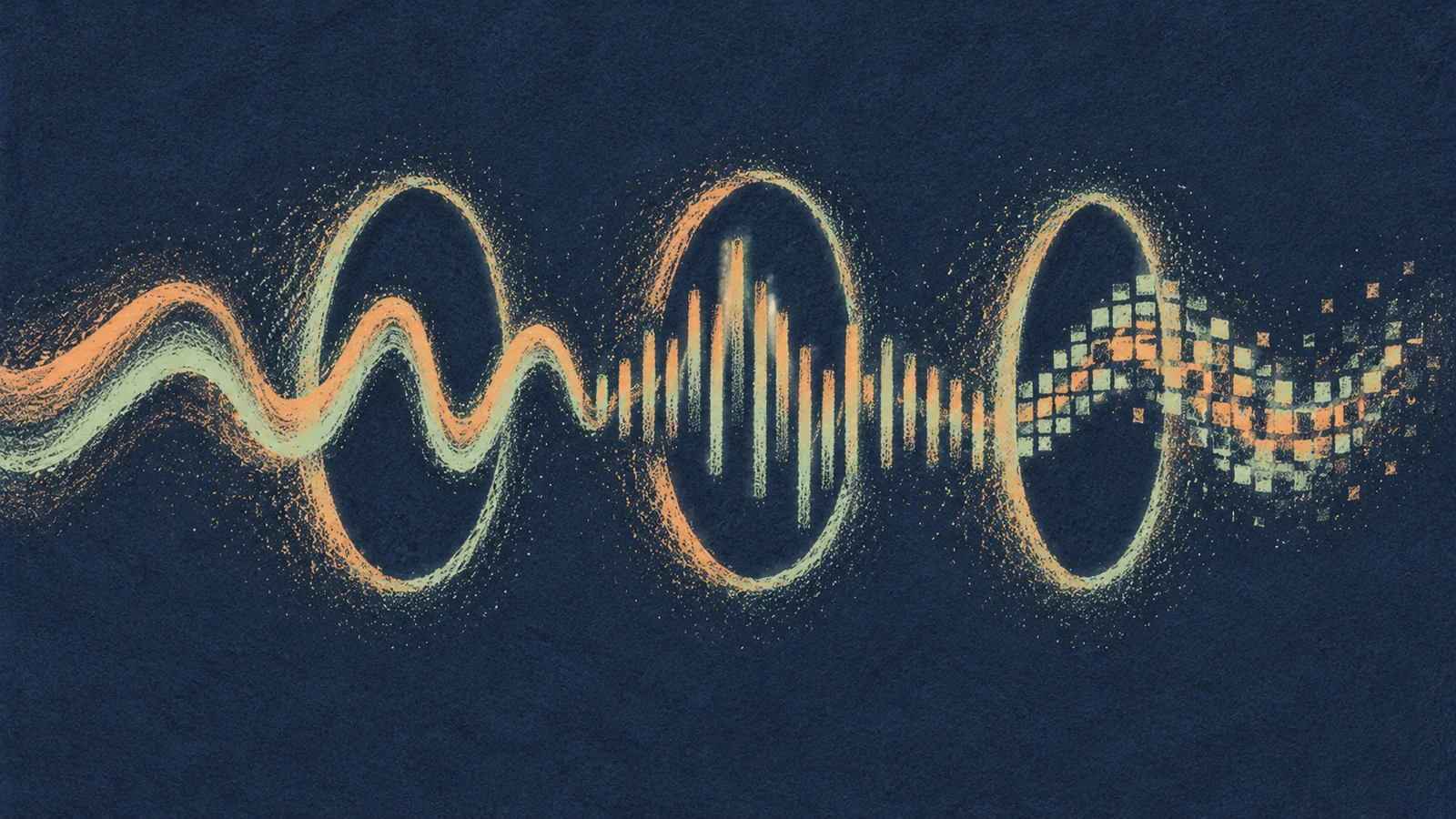 Seeing soundWaveforms, spectrums and spectrograms, and what each one hides
 Level and loudnessDecibels, peaks, RMS and LUFS, and why louder can seem better
 Digital audioSample rate, bit depth and what happens when sound becomes numbers
 Listening and comparingHow to tell whether a change is really better

Music theory and musical ideas
Develop a musical idea through rhythm, harmony, melody and contrast, with no staff reading required.
 Pitch and intervalsThe distance between two notes, and why some distances feel stable
 Rhythm, meter and groovePulse, subdivision, swing, and why a grid alone doesn't groove
 Scales, modes and tonal centersWhy the same notes can feel like a different home
 ChordsHow stacking intervals builds triads, sevenths and colour tones
 Chords and voicingSame notes, different feelings: how spacing and order change a chord
 Progressions and harmonic movementCadences, borrowed chords and modulation, and how harmony creates motion
 Melody and motifsContour, repetition and variation, and why some tunes stick
 Bass lines and counterlinesHow a second line supports a phrase without copying it
 Form and arrangementTurning a loop into a piece with sections, contrast and energy
 Ear trainingHearing intervals, chords and rhythm without looking
 Tuning systemsEqual temperament, just intonation, gamelan and beyond
 Music as dataDistributions, transitions and what a model keeps or throws away
 Chord and key recognitionHearing harmony in a recording, and why the answer is often two answers