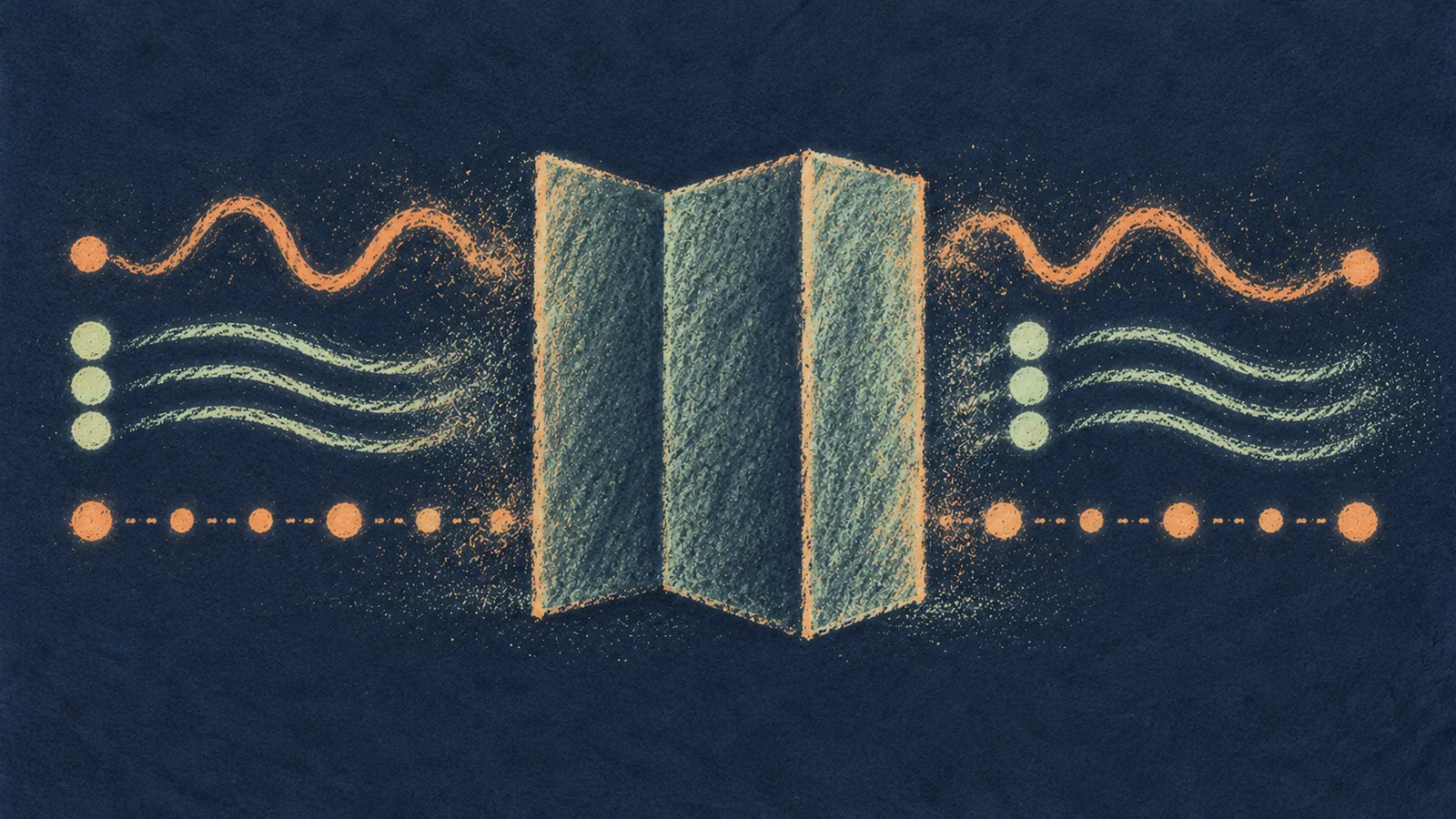
Every piano you've ever played is slightly out of tune, on purpose. Not by much: never more than about a sixth of a semitone. But they're there in every key, every chord, and once you hear them you can't stop hearing them. Here's a major third, C and E, held on two saw waves.
Hold the pair and switch System between just and equal. Which one shimmers, and what happens to the shape on the scope?
Two thirds
System
Press Hold the pair with System set to just, then switch to equal and hold it again. Before you do: the note names are the same in both. Do you expect to hear any difference at all?
Two thirds, both "correct"
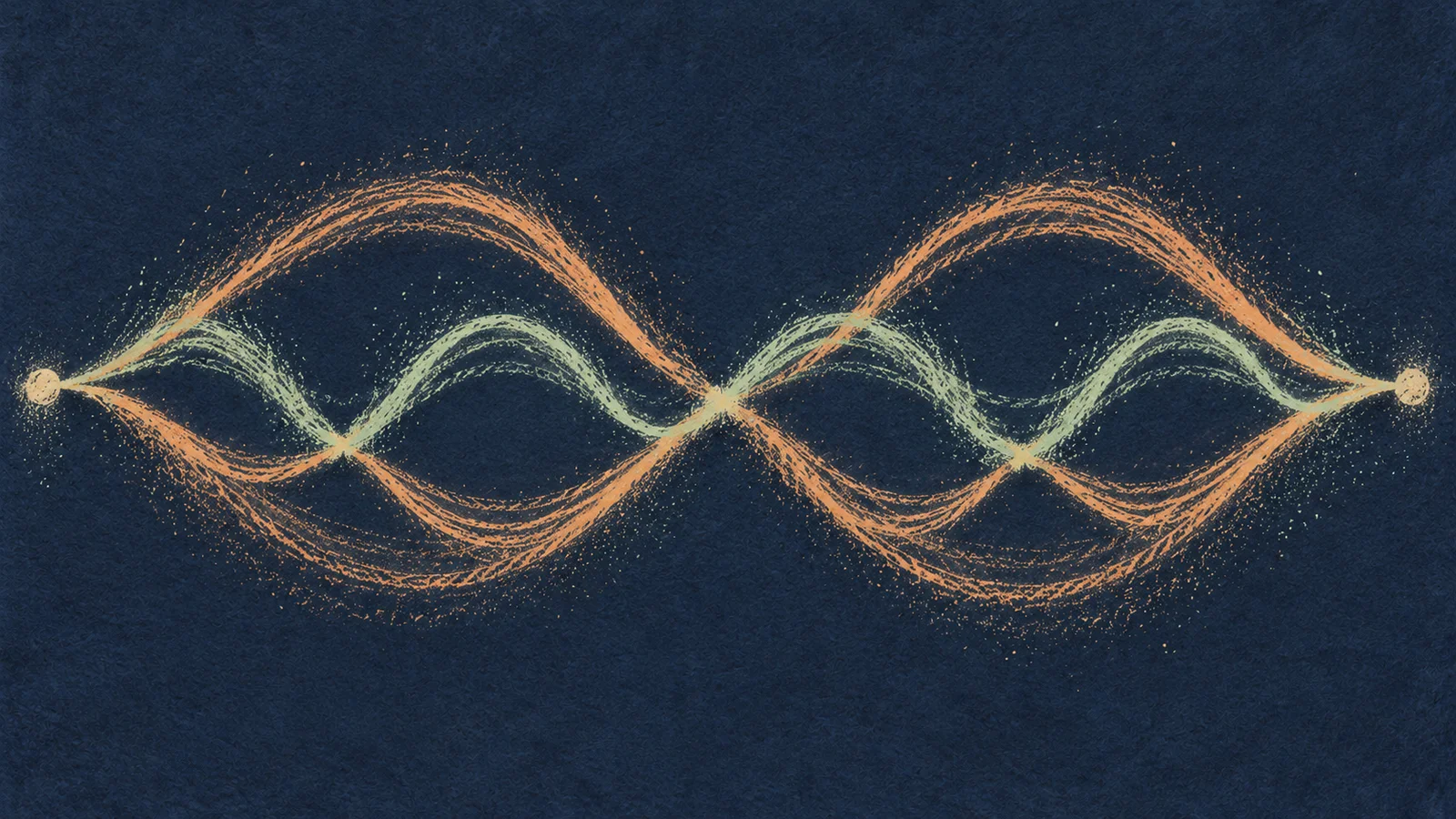
In the just version, the scope's picture stands still and the chord sounds smooth and glassy. In the equal version, there's a fast flutter inside the sound, roughly ten pulses a second, and the scope picture crawls. Both are a major third. They're tuned differently.
The just third is a whole-number ratio: E vibrates exactly 5 times for every 4 vibrations of C, so the two waves line up again and again, and so do their harmonics. The equal-tempered third is a little wider. Its harmonics land close to C's but not on them, and two tones a few hertz apart beat: they drift in and out of phase, which you hear as a pulsing.
Now set Interval to 7 for a fifth and compare again. The difference almost disappears. The equal-tempered fifth is only 2 cents (two hundredths of a semitone) away from a pure 3:2, so it beats about once a second at this pitch, slow enough to sound like gentle life rather than flutter.
Why the piano compromises
A tuning system is a rule for where the notes go. Two main ideas pull against each other:
- Just intonation tunes intervals to simple whole-number ratios: 2:1 for the octave, 3:2 for the fifth, 5:4 for the major third. Chords ring cleanly.
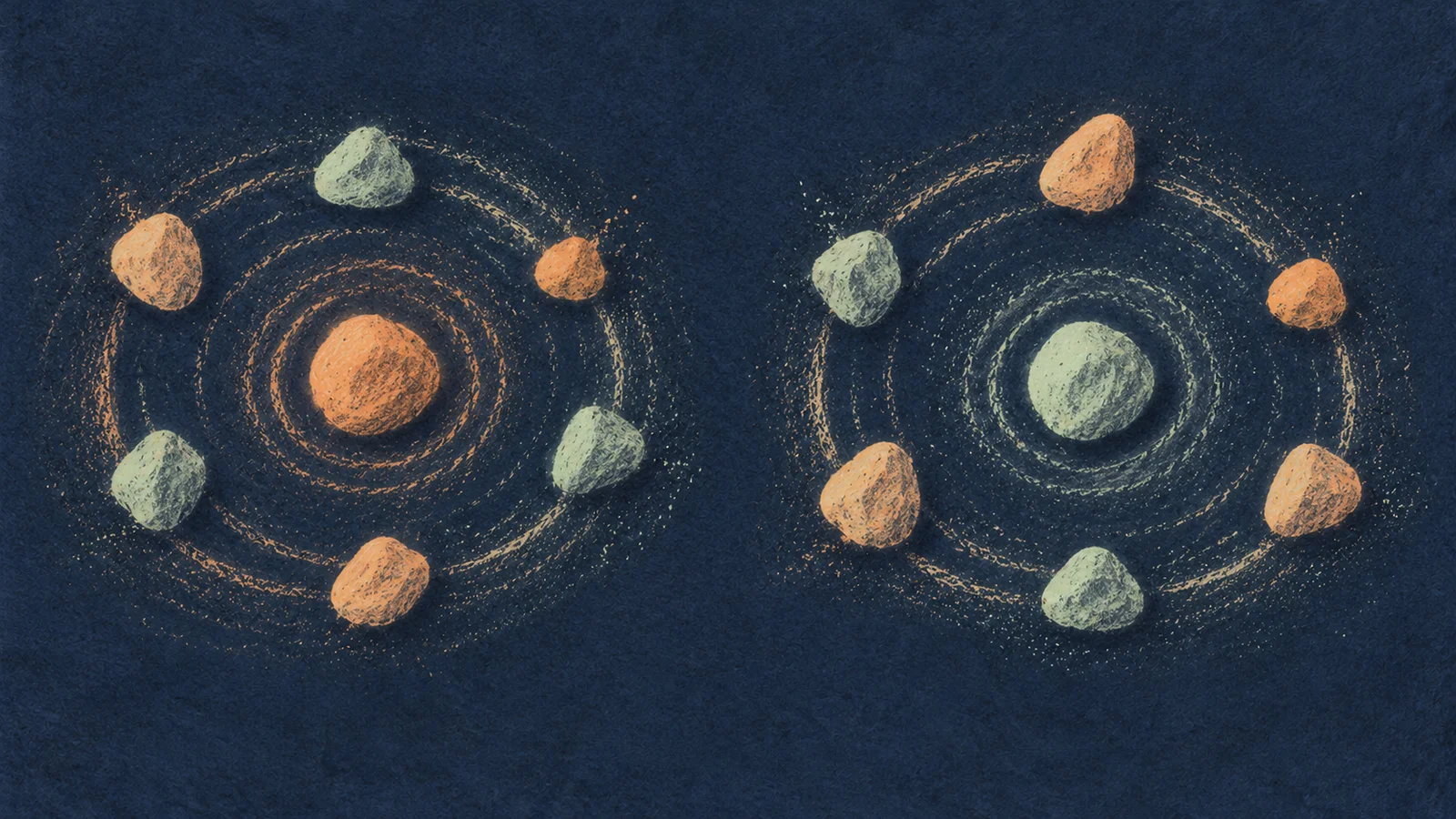
- Twelve-tone equal temperament (12-TET) splits the octave into twelve identical steps. Every key is exactly the same as every other, so you can play in any key and transpose anything.
You can't have both on a fixed keyboard. Stack twelve pure fifths and you overshoot seven octaves by about a quarter of a semitone (the Pythagorean comma), so pure intervals never quite close the circle. Something has to give. Equal temperament spreads the error evenly, so every interval is a little off and none is badly off.
How far the piano is from pure
A cent is a hundredth of an equal-tempered semitone. The thirds and sixths are where the compromise lives, which is why a sustained major chord on a synth can sound a little restless, and why the same chord sung by a good barbershop quartet, who bend their notes towards the pure ratios, seems to ring and lock.
History is full of other answers. Renaissance keyboards often used meantone tunings with beautifully pure thirds, at the cost of a few keys being unusable (one fifth was so out of tune it was called the "wolf"). Bach's Well-Tempered Clavier, with a prelude and fugue in every key, was written for tunings in which every key was playable, each with its own slight colour. Equal temperament won out in the West mostly because it made every key the same.
Many musics, many tunings
Equal temperament is one choice, not the definition of "in tune". Most of the world's music doesn't use it.
Arabic maqam uses intervals that fall between the piano's keys, such as a "neutral" third halfway between minor and major. Their exact size varies from region to region and player to player, and it's part of what gives each maqam its character. Played on a piano, those maqam simply lose their identity.
Gamelan, the bronze ensembles of Java and Bali, use tunings called slendro (five notes to the octave) and pelog (seven, of which a piece usually uses five). Each gamelan is made and tuned as a set, and no two ensembles are tuned quite alike: an ensemble's tuning is part of its identity, so instruments from different gamelan generally can't be mixed. A Javanese gamelan often has two complete sets of instruments, one in each tuning.
Here's a struck metallophone modelled on gamelan instruments, with a slendro tuning loaded.
Play C, D, E, G and A on the keyboard, then switch Tuning to equal and play them again. Then raise Ombak Amt. What does each tone start to do?
A five-note octave
Tuning
In slendro, only the keys C, D, E, G and A make a sound: the scale has five notes, so the keyboard's other keys have nothing to play. Listen to how even the steps feel compared with the piano's mix of whole steps and leaps. This slendro is one software approximation with nearly equal steps; real ensembles each have their own, often noticeably unequal, slendro.
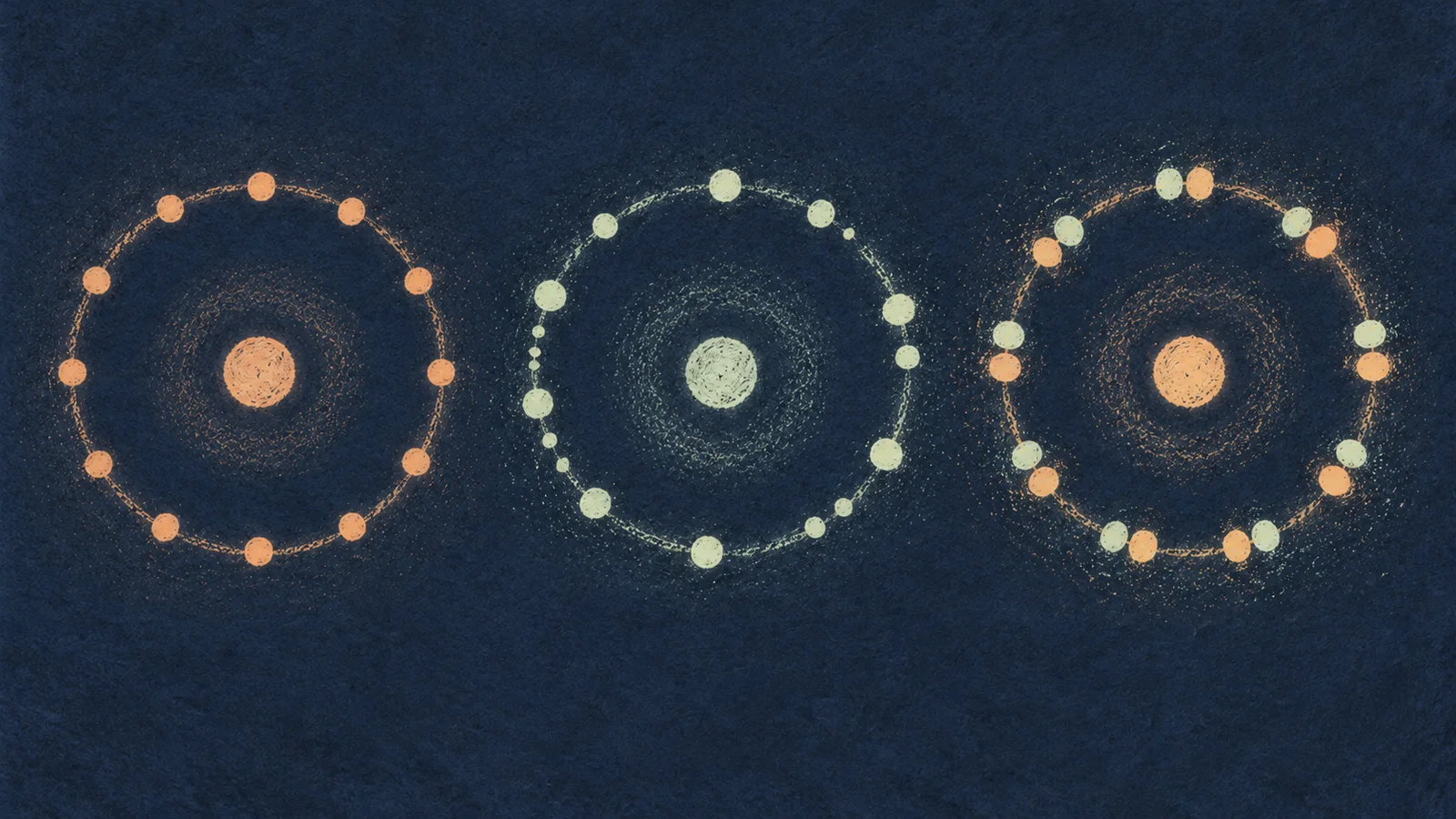
Two ways to split an octave
Beating on purpose
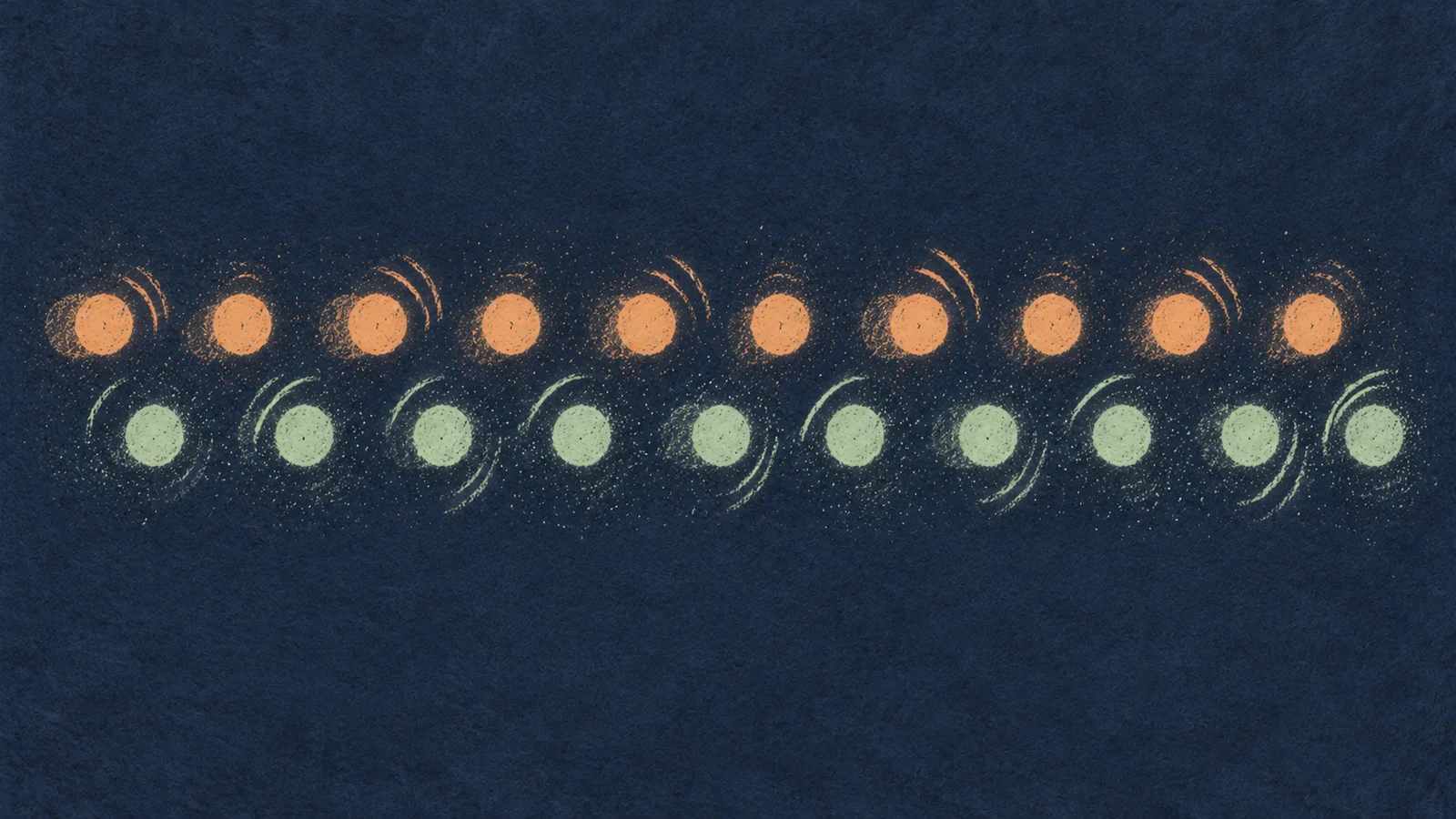
Balinese gamelan instruments are built in pairs, one tuned slightly lower (the pengumbang) and one slightly higher (the pengisep). Played together, each note pulses with a shimmering beat called ombak, which means "wave". That beating is the very thing equal temperament treats as a flaw, and in Balinese gamelan it's tuned in deliberately, as part of the sound. In the lab above, Ombak Amt and Ombak Rate set how far apart the twin tones are, and so how fast the wave pulses: raise them slowly and listen to the bronze start to breathe.
Vitale and Sethares' study of Balinese gamelan tuning looks at paired tuning and ombak across real ensembles, and at how much they vary. For a named Sundanese ensemble with recordings and context, this pelog guide from Ableton's online tuning project is a good place to listen. A tuning table is a starting point. The music lives in the ensembles, the repertoire and the people who play it.
To use the paired-tuning idea in an original sound, try Gamelan-inspired texture. It shapes a short figure around the model's shimmer and decay, and compares the result on headphones and a single speaker.
Same idea, different place: a chorus pedal makes a guitar shimmer by mixing it with a slightly detuned copy of itself. Ombak gets the same shimmer from tuning instead of a delay line. See Chorus, flanger and phaser.
Where comparisons get unfair
If you change the tuning and the instrument at the same time, you can't tell which one you're reacting to. Compare tunings on the same sound, at the same pitch and level, as the first lab does.
And beating isn't the same as "bad". A slow beat sounds alive, a fast one sounds rough, and whether you want either depends on the music. Researchers have found that people's preferences for chords vary with the music they grew up with, even when their sensitivity to roughness is similar (McDermott and colleagues studied this with listeners in Bolivia and the United States). "In tune" is partly physics and partly culture.
Make it yours
In the first lab, try every interval from 1 to 12 in both systems, and find the two that change most when you switch. Then write a three-note phrase and play it on the gamelan model in slendro, then in equal. Decide which tuning you'd use for it and why, in one sentence: "the just third for a long held pad" or "slendro because no step sounds like a piano".
Keep the setting and the reason together. A tuning choice is a musical decision, and the reason is what you'll want to remember.
Quick check
- What's a pure 3:2 fifth above 240 Hz? 360 Hz: multiply by 3, divide by 2. The equal-tempered fifth would be about 359.6 Hz, close enough that most people only hear the difference as a slow beat.
- Two gamelan instruments are tuned a few hertz apart and the note pulses. Is one of them out of tune? No. In Balinese paired tuning, that beat (ombak) is intended. Beating describes what's physically happening; whether it's a flaw depends on the music.
- Which intervals change most between just and equal tuning: fifths or thirds? Thirds and sixths, by around 14 to 16 cents. Fifths and fourths differ by only about 2. That's why the first lab's third shimmers and its fifth barely moves.
Next steps
- Go deeper: Music as data. A tuning is a table of numbers, and every table keeps some things and drops others. What does a computer keep when it turns music into data?
- Use it: Physical modeling. How a struck bar's own harmonics shape which tunings sound good on it.