Here's a sine tone sweeping from the lowest bass to the top of your hearing, played through a bitcrusher. Before you press play, a prediction: the sweep only ever goes up. What will you hear?
The sweep only rises. Listen to the last second with the effect on: which way does the pitch go?
The tone that turns around
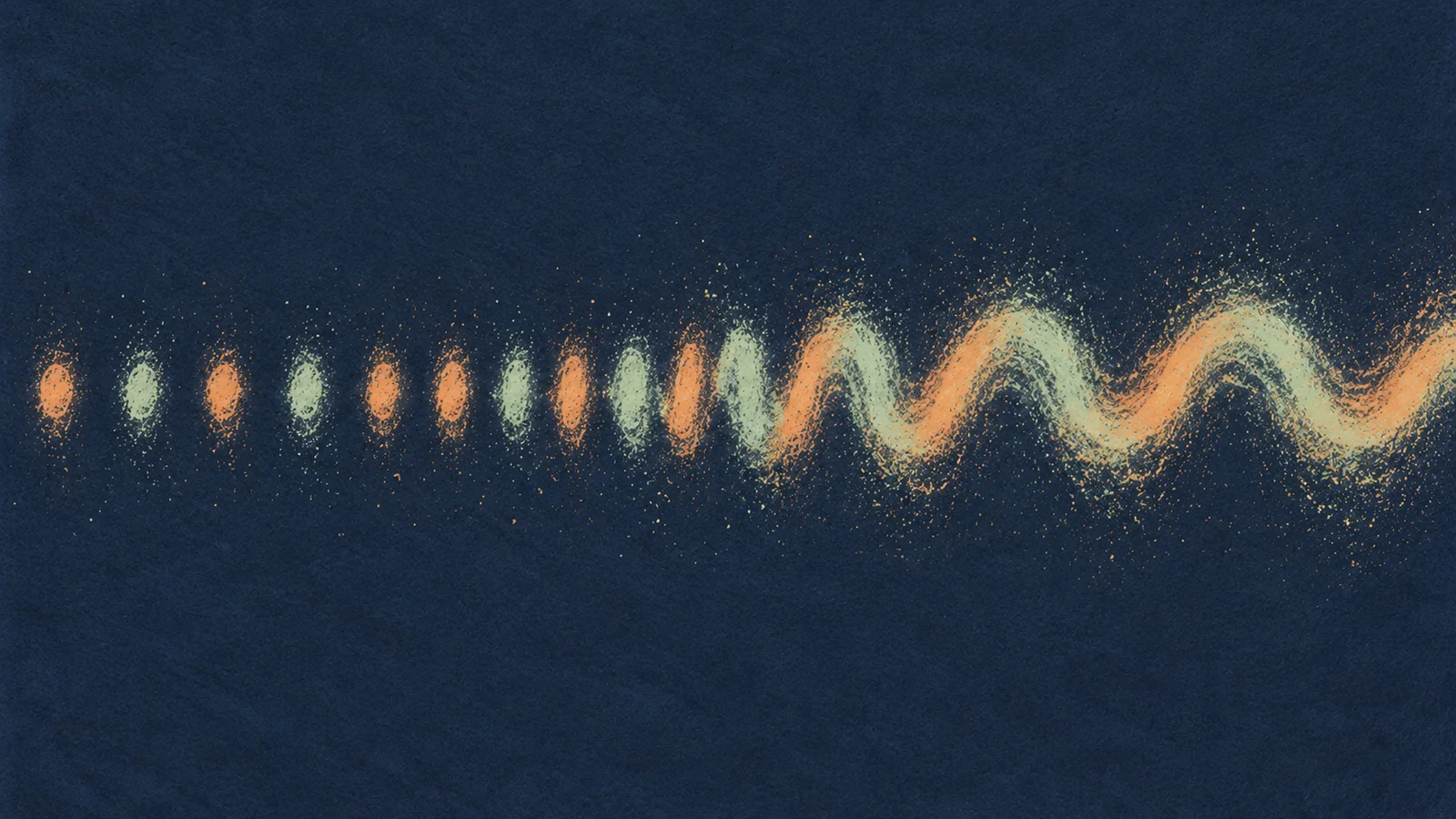
Up, up, up... and then, right near the top, a tone comes swooping down toward the bass. Switch to Dry and the sweep climbs cleanly all the way. Nothing in the input ever falls. The falling tone was made by turning sound into numbers too slowly.
Same trick as a wagon wheel
You've seen this in films. A stagecoach speeds up, and its wheels seem to slow down, stop, and spin backwards. The camera takes 24 snapshots a second. Once the spokes move almost a full step between snapshots, the eye can't tell "nearly a full turn forwards" from "a little bit backwards", and picks the simpler story.
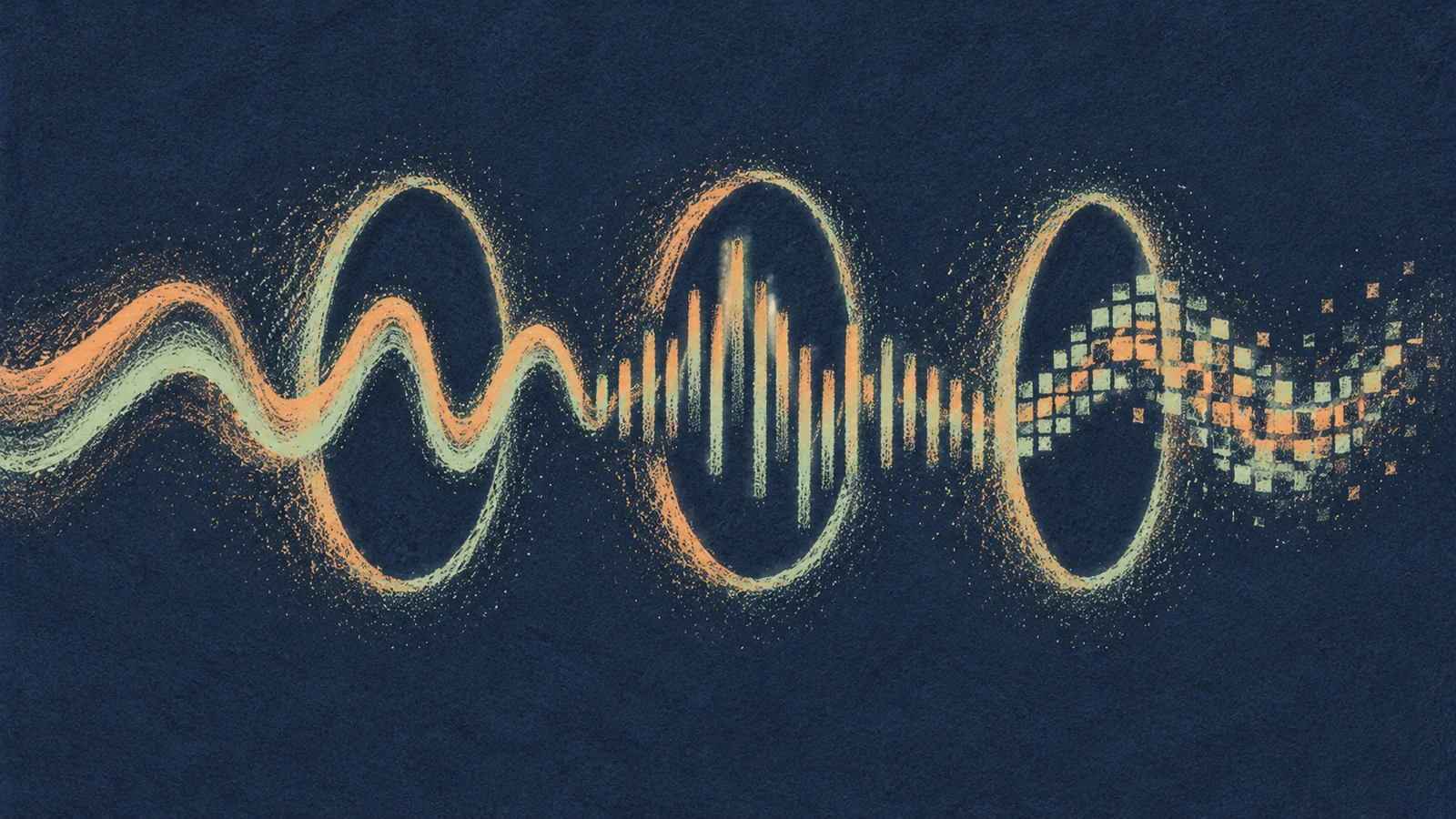
Digital audio takes snapshots too. Each one is a sample: a single number saying where the wave was at that instant. The sample rate is how many snapshots per second. A CD uses 44,100; most music software runs at 48,000.
The bitcrusher above takes its snapshots at only 12,000 a second. That's enough to describe waves up to 6,000 Hz: you need at least two samples per cycle, one for the up and one for the down. That limit, half the sample rate, is called the Nyquist frequency. Above it, the samples can't tell a fast wave from a slower one, and the slower one is what you hear.
Where does the folded tone land?
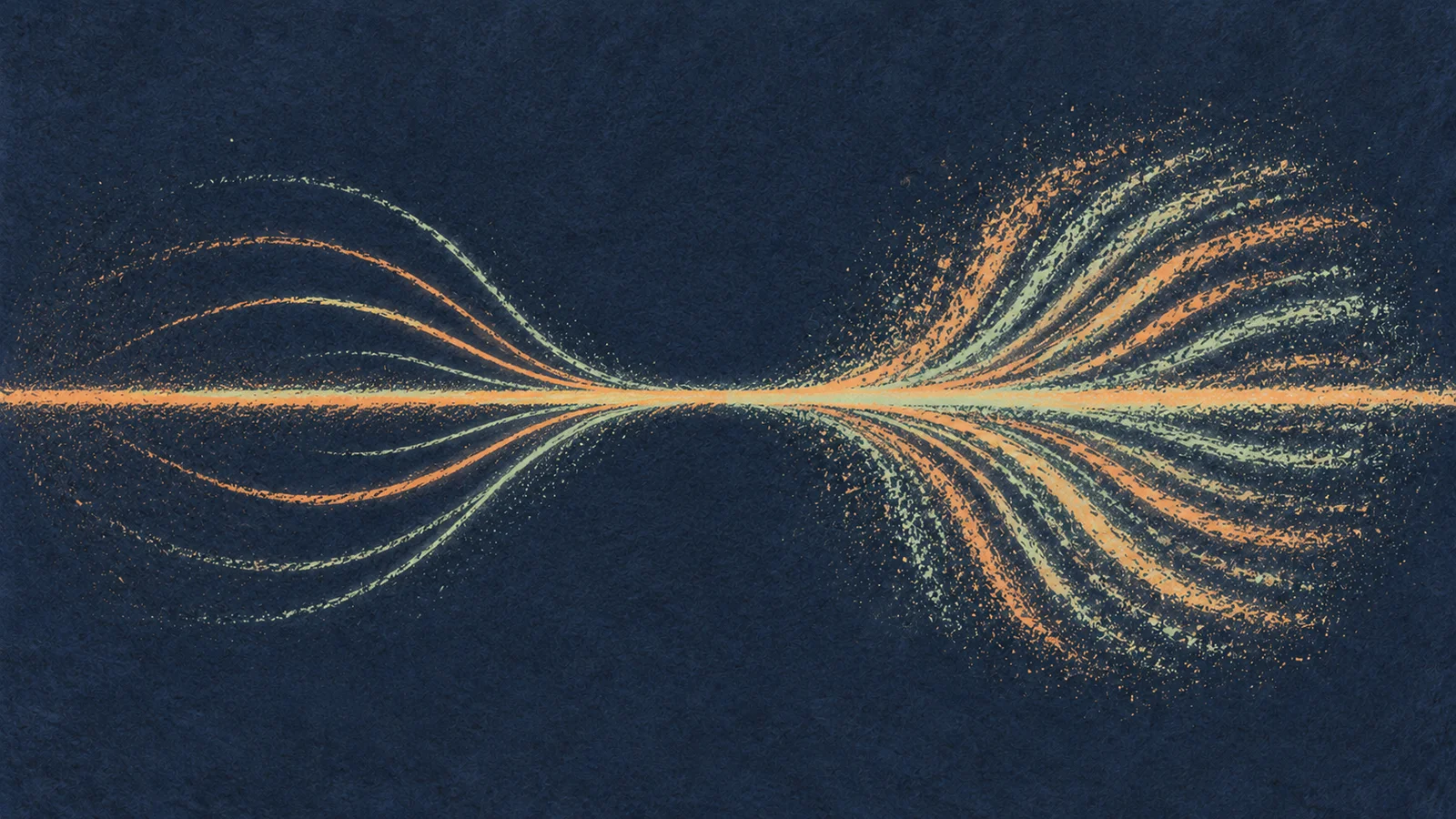
The rule is beautifully simple. A tone above the limit reflects back down, like a ball bouncing off a ceiling, by the same distance it went over.
Bouncing off the ceiling
| You play | You hear (at 12 kHz sampling) |
|---|---|
| 3 kHz | 3 kHz |
| 7 kHz | 5 kHz |
| 9 kHz | 3 kHz |
| 11 kHz | 1 kHz |
Between 6 and 12 kHz, just subtract the input from 12. As the input climbs, the answer falls. That's your swooping tone. This folding has a name, aliasing: a frequency shows up wearing another frequency's name.
The surprise is that a too-low sample rate doesn't just lose the treble. It invents new notes that were never played, and they usually don't fit the key.
Why your recordings don't do this
Proper converters put a steep low-pass filter in front of the sampler, removing everything above the limit before it can fold. So a 48 kHz recording simply can't contain anything above 24 kHz, which is above what most adults can hear anyway. Lower the rate with a filter and you get a duller sound. Lower it without one and you get aliasing.
Bitcrushers mostly skip the filter on purpose. That's the sound. Switch the lab's source to the keys phrase: the chords pick up a metallic, slightly out-of-tune shimmer, because their upper harmonics are folding down into places they don't belong.
Hip-hop producers fell in love with exactly this kind of grit. The E-mu SP-1200, a drum machine and sampler behind a great deal of late-1980s and early-1990s hip-hop, sampled at about 26 kHz with 12-bit numbers. Its slightly crunchy, gritty drums became a sound people now add on purpose.
The other limit: how precise each number is
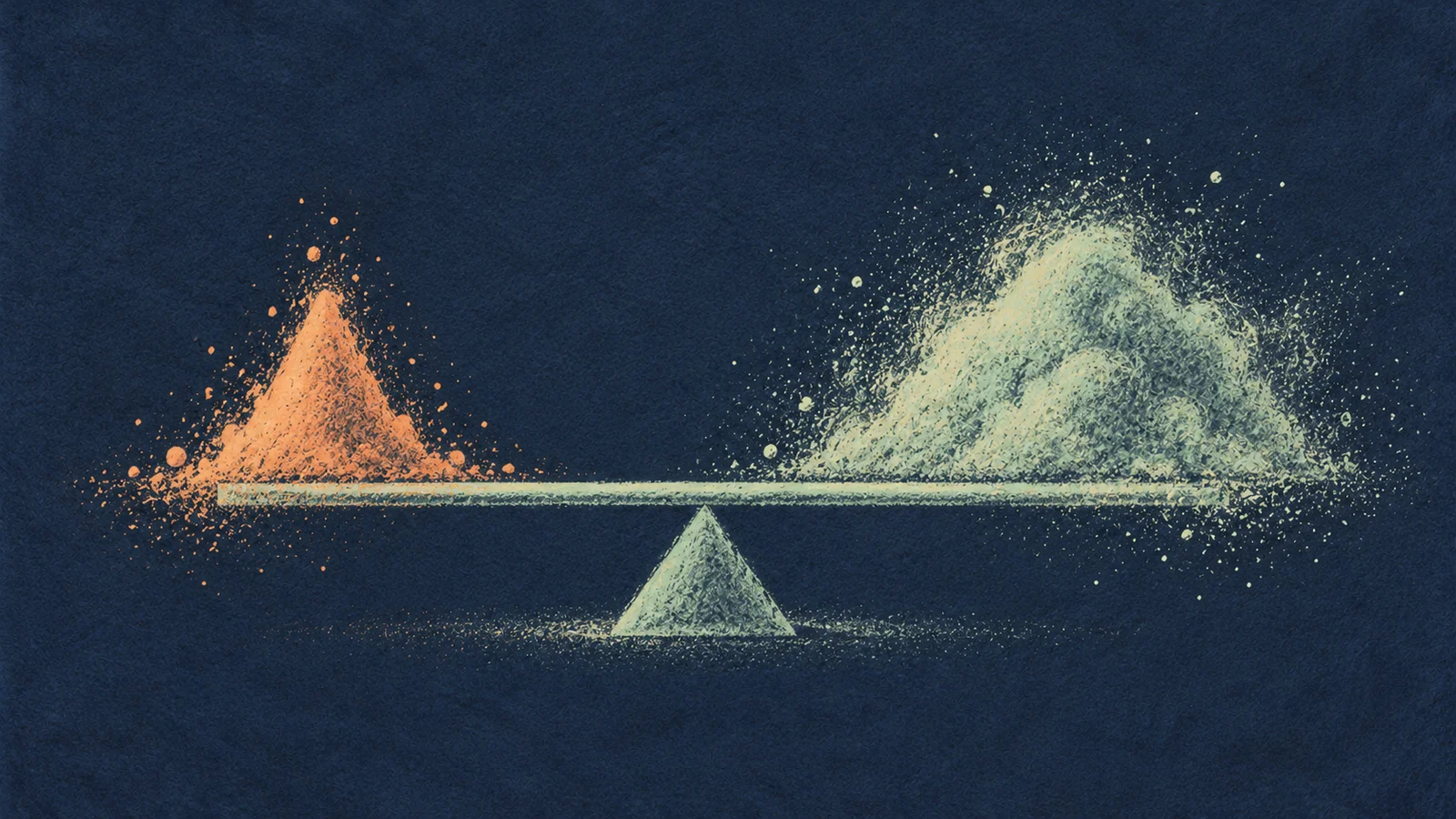
The sample rate is about time: how often you look. Bit depth is about precision: how many different values each snapshot can have.
- 16 bits gives 65,536 possible levels. That's CD quality.
- 8 bits gives 256.
- 4 bits gives 16.
With fewer levels, every sample has to be rounded to the nearest step. That rounding is called quantization, and the error it leaves behind is a kind of distortion that follows the music.
Lower the bit depth. When does the sine stop looking like a sine?
Rounding to the nearest step
Now go back to the lab, keep the keys phrase playing and lower Bits. Around 8 you'll hear a fizz riding on every note. Around 4 the quiet tails of each chord start to break up and crackle, because a quiet signal only touches the bottom few steps. By 2 the chords sound like they're coming through a broken radio.
Notice that the two limits are independent. A higher sample rate doesn't add more levels. More bits doesn't raise the Nyquist ceiling. They wreck sound in different ways, which is why good lo-fi effects give you a control for each.
Why adding noise can make things cleaner
Here's a counterintuitive one. When you reduce bit depth for real, say exporting a 24-bit mix to a 16-bit file, engineers add a tiny amount of noise first. It's called dither.
Without it, a very quiet fade-out gets rounded into a few hard steps, and the rounding error sounds like gritty, buzzy distortion that tracks the music. With dither, that error becomes a faint, steady hiss instead, and your ear can hear the fading note right down through the noise. A bit of smooth hiss is much less noticeable than distortion that follows every note.
Dither fixes rounding. It does nothing for aliasing: once a tone has folded, it's a real tone in the file.
Where the experiment stops being simple
With one sine, you can predict every folded tone with a subtraction. With a drum loop or a full chord, every harmonic folds separately, so the result turns into a cloud of inharmonic grit no table could predict. Register matters too: a crushed setting that sounds warm on low notes can turn sour on a high melody, because the high notes have more harmonics above the limit. Always play the highest note you plan to use before you commit.
Same idea, different place: a synth can alias with no effect at all. A plain saw wave played high has harmonics far above the Nyquist limit, and they fold just like the sweep did. That's why Oscillators and waveforms cares so much about band-limited oscillators.
Make it yours
Open Crush with a sound of your own, a drum loop or a few chords. Find the setting where the grit adds character: the "cassette from a dusty shelf" feeling. Then keep pushing until it stops being character and starts being damage. Where did it break: the attack, the pitch, or the quiet tails?
Back off to the good side and save the preset with the register in its name, like "Dusty keys, below C5". You've made a sound on purpose, and you know exactly where its edge is.
Quick check
- A synth lead at 9 kHz goes through a crusher sampling at 12 kHz. Your friend hears a strange 3 kHz tone. Where did it come from? It's the alias: 12 minus 9 is 3. The 9 kHz tone folded back below the 6 kHz limit. It doesn't vanish, it lands somewhere else.
- You switch your project from 44.1 kHz to 96 kHz. Do quiet fades get smoother? Not because of the rate. Higher sample rate raises the frequency ceiling; smoother quiet passages come from more bit depth (or proper dither when you reduce it).
- A bitcrushed snare sounds great, but a bitcrushed hi-hat sounds harsh and out of tune. Why the difference? The hi-hat has far more energy above the Nyquist limit, so much more of it folds back down into strange frequencies. Same setting, very different amount of aliasing.
Next steps
- Go deeper: Listening and comparing. Crushed sounds often seem louder and more exciting at first. Are they better, or just different and louder?
- Sideways: Distortion and saturation. Distortion invents new harmonics, and some of them won't fit either.