The table loaded in the synth below was cut from a real guitar recording. Before you press play: will it sound like a guitar?
This table came from a guitar recording. Play a note and sweep Position. What's left of the guitar?
A guitar that isn't
It doesn't. There's no pick, no pluck, no ringing string fading away. Instead there's a steady, dense, slightly nasal synth tone that holds for as long as you hold the key, and changes colour as you drag Position. It has something of the guitar's character, a woody edge here, a hollow brightness there, but none of its behaviour.
What just happened?
A wavetable doesn't play a recording. It plays frames: tiny slices, each treated as one single cycle of a wave, repeated over and over at the pitch of the note you play. Play middle C and the synth loops that one slice about 262 times a second.
That one decision throws away almost everything that made the guitar a guitar. The attack of the pick lived across thousands of cycles; one cycle can't hold it. The way the note decayed and darkened lived across seconds; repetition freezes it. What survives is the tone colour at one instant: the balance of harmonics in that one slice. The synth's own envelope now decides how the note starts and ends.
A table is a stack of these frames, cut from different moments. Position chooses which frame you hear, and blends smoothly between neighbours when you land in between. Sweeping it lets you travel through the colours the guitar passed through, at whatever speed and in whatever direction you like, while the pitch stays wherever your finger is.
A position is a colour, not a time
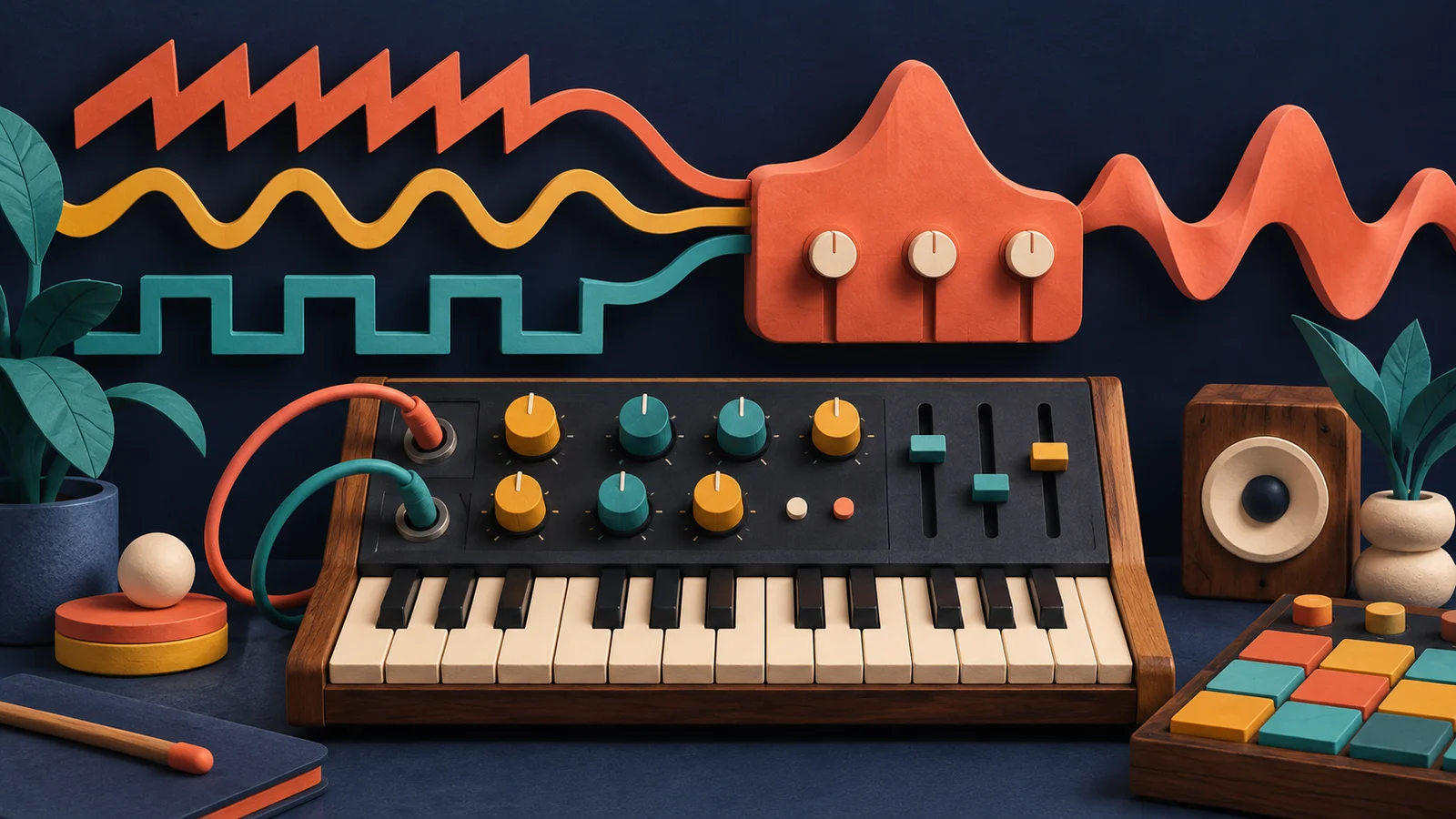
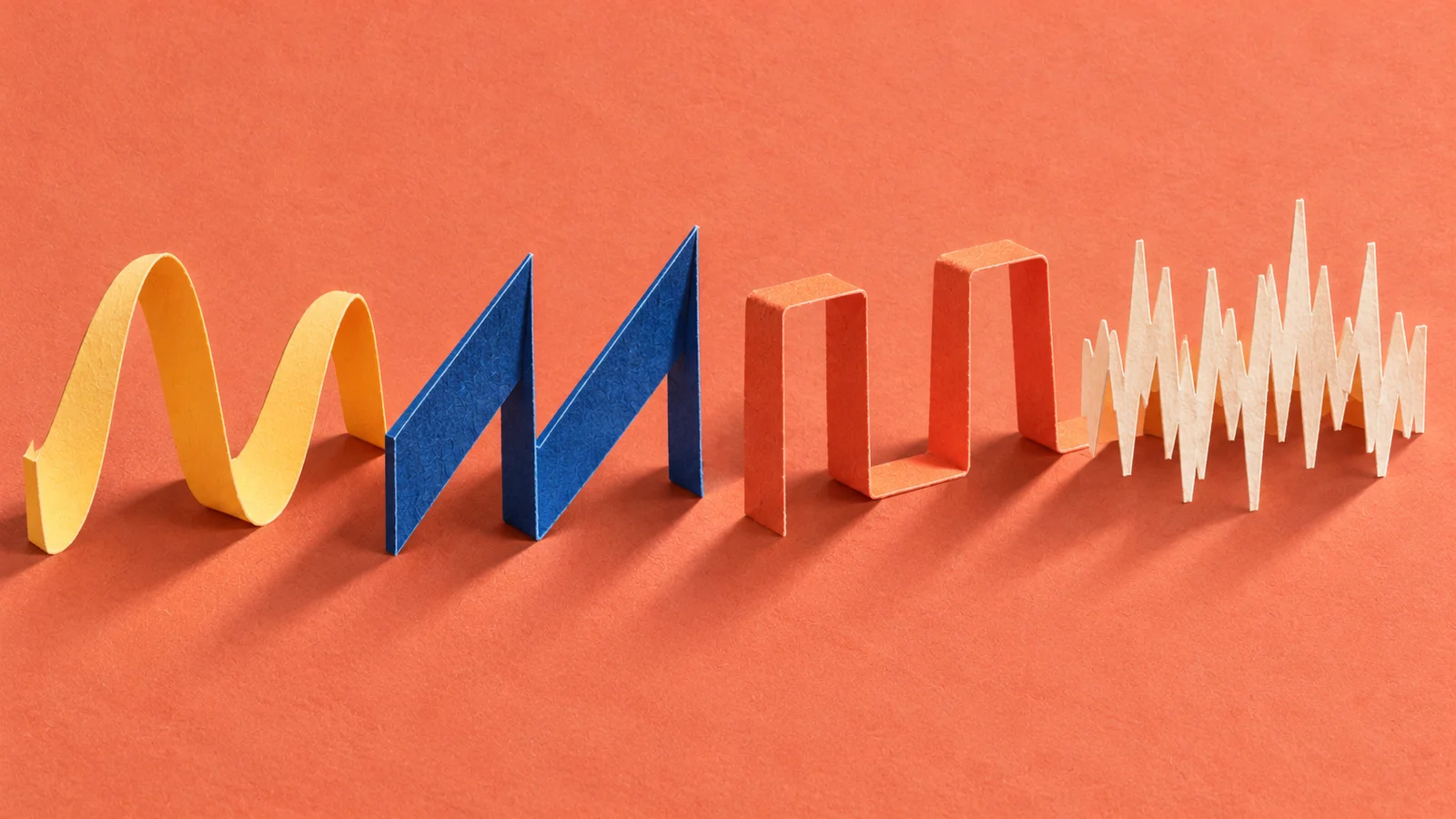
The easiest way to feel this is with a table where you already know every frame. The synth below holds a stack of four shapes you met in the oscillators guide: sine, triangle, saw and square, in that order.
A table is a stack of frames
Drag Position slowly from 0 to 1. Where does the tone change most, and does the pitch ever move?
Sweep through the basic shapes
Hold a note and drag Position slowly upward. The single spectrum line of the sine grows faint odd harmonics as you reach the triangle, fills in every harmonic at the saw, then loses the even ones again at the square. The pitch never moves. Position is a colour control, and the table's order decides the journey. "More Position" doesn't mean brighter in general; it means "the next frame in this stack", whatever that happens to be.
Where wavetables came from
Wolfgang Palm brought the idea to keyboards in the late 1970s and early 1980s. His PPG synthesizers from Germany, including the Wave series that began in 1981, stored stacks of single-cycle waves in memory and let players sweep through them, something no analog synth could do. This gave players evolving, glassy, digital colours long before computers could do much else with sound. Today's software wavetable synths made the idea hugely popular in electronic music, and many draw the frame stack as the rotating 3D landscape you've probably seen. Under the graphics, it's the same thing you just played: one cycle at a time.
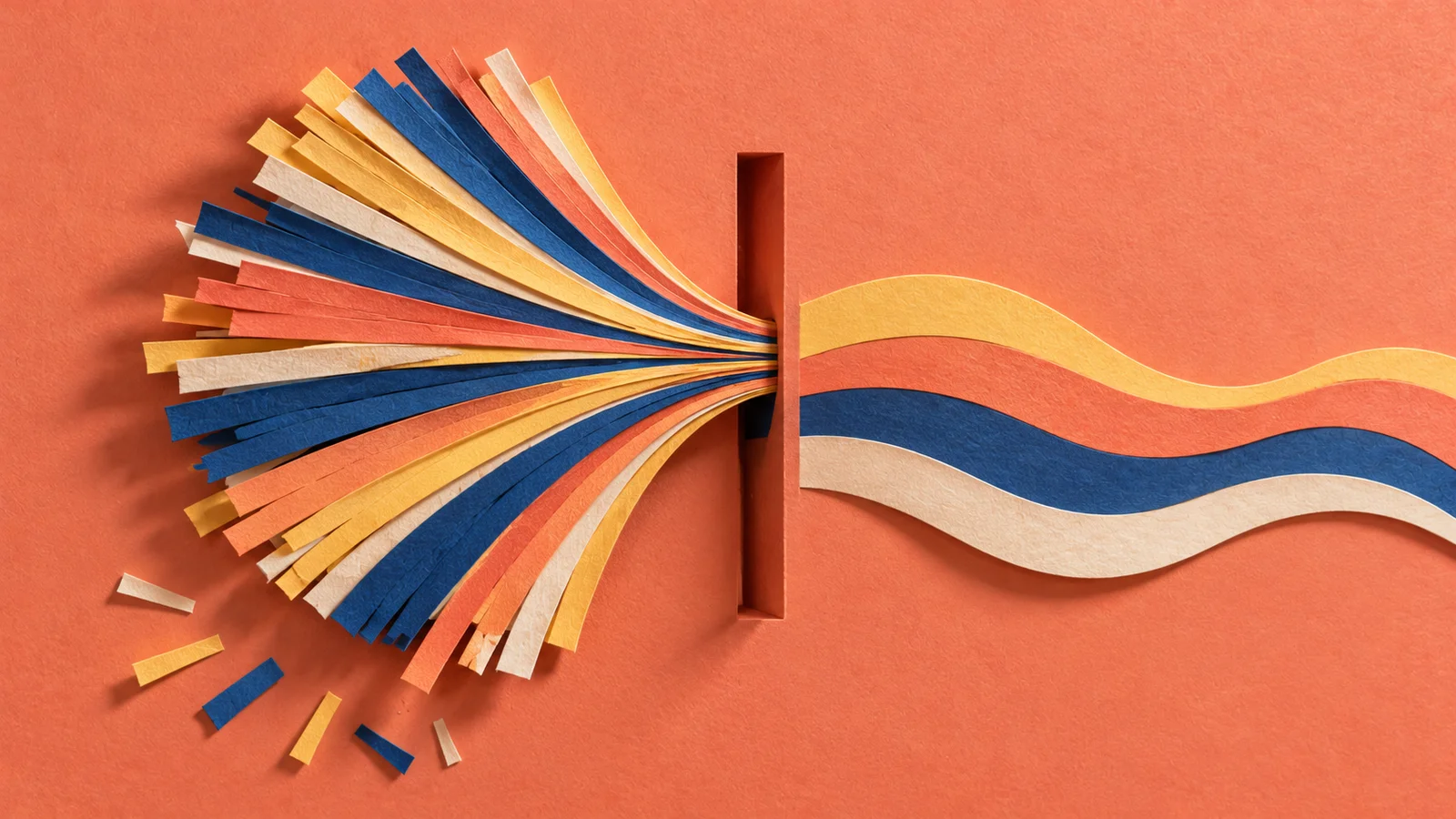
Modern synths also let you make tables from any recording, which is where the guitar table came from. Cut a recording into many slices, treat each as a cycle, stack them up, and you have a table that carries the recording's colours without its timing. Vocal tables give you vowel-like formant sweeps; tables from bells and pianos give you metallic and woody colours that don't behave like bells or pianos.
The sweep is yours to perform
On this synth, nothing moves Position for you: no LFO or envelope is wired to it, so every sweep is your hand. That's a good way to learn the table. Hold a chord and sweep slowly, the way a keyboard player rides a filter. Try it backward. Stop where the colour suits the moment.
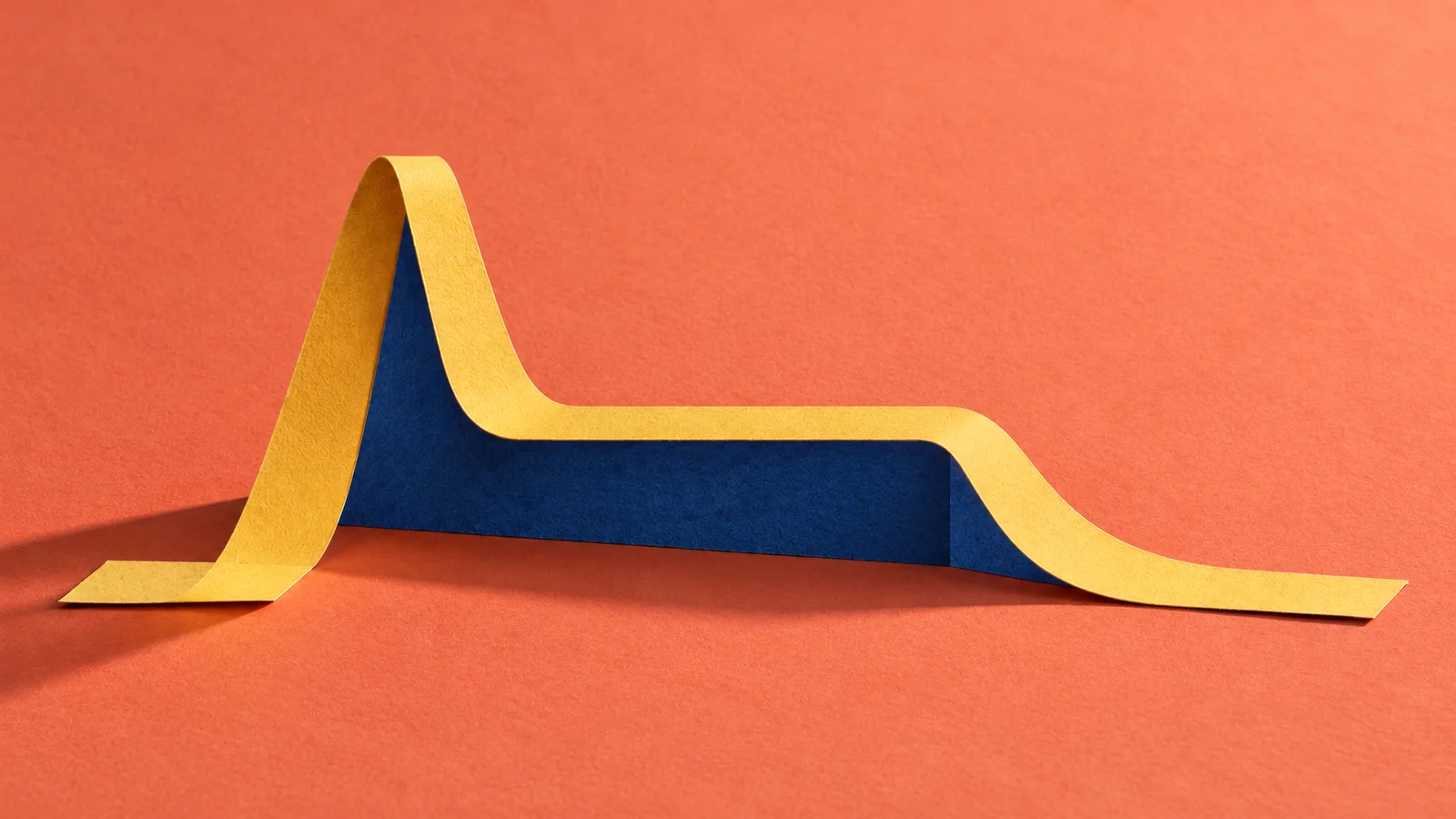
When you do want movement on its own, the same ideas from the envelopes and LFO guides apply: a slow LFO on position makes a pad shimmer and evolve; an envelope on position makes each note start on one frame and settle on another, which is a wonderful way to make a pluck.
Where it breaks
Zipper jumps. Neighbouring frames can be very different. Sweep fast across a table whose frames change abruptly and you'll hear stepping or grit instead of a smooth morph. Smooth interpolation helps, but it can't make two unrelated shapes feel related. If a section of a table jumps, use it as an accent, or park on either side of it.
Bright frames, high notes. A frame with lots of upper harmonics carries them up the keyboard. Play it high and they head toward the top of what digital audio can hold. The synth band-limits its tables to keep that clean, but very dense frames on high notes are still worth a listen before you commit.
Stacking up level. Two oscillators, unison and big chords all add up, and the master level won't stop you going over the top. If chords sound crunchy when single notes don't, turn the master level down rather than the oscillators.
Same idea, different place: a wavetable frame is the shortest loop a sampler could ever play. Loop any recording that tightly and it stops being the recording and becomes an oscillator: the pitch now comes from how fast the loop repeats, not from what was played. See Loops and releases, where the same trade between recording and repetition decides how a sampled note sustains.
Make it yours: a hand-swept pad
In the guitar lab, open the full Wavetable panel and try the other guitar tables, Stab Grain, Chord Grain and Picked Grain. Pick the one you like and find the two positions that sound most different: maybe a soft, dark one and an open, bright one. Test each as a still sound first. A good start position should work on its own, before any movement.
Then reveal Attack and Release, slow them down to a second or more, and play a chord while sweeping from your first position to your second over a few seconds. That's a pad with a built-in arc. When it feels right, open Wavetable from the link at the top of the lab, which carries your settings, and save it, with the two positions in the name ("Chord Grain pad 0.2 to 0.7"), so you remember where the journey goes.
Take that arc further with Evolving pad: coordinate two layers moving in opposite directions, then choose where the pad should brighten and where it should leave room for a melody.
Quick check
- A friend loads a wavetable made from a vocal recording and is disappointed that it doesn't sing the words. What would you tell them? A wavetable repeats single-cycle frames, so the words, timing and phrasing are gone. What remains is the vowel colour at each slice, which is why vocal tables are great for formant sweeps and talking pads, not for lyrics.
- You turn Position up expecting a brighter sound, and it gets darker. Is the synth broken? No. Position moves through the table in order. In this table, the later frames happen to be darker. Learn each table's journey by sweeping it slowly once.
- Your pad's sweep sounds grainy and stepped in one section. What are two things you could try? Sweep that section more slowly, or avoid it: park on either side of the jump. Abrupt changes between neighbouring frames can sound stepped no matter how well they're blended.
Next steps
- Use it: Presets as product design. Turn the evolving patch into starting sounds that show its useful range.
- Go deeper: Additive synthesis. Each frame is a recipe of harmonics. Could you skip the recording and write the recipe directly?