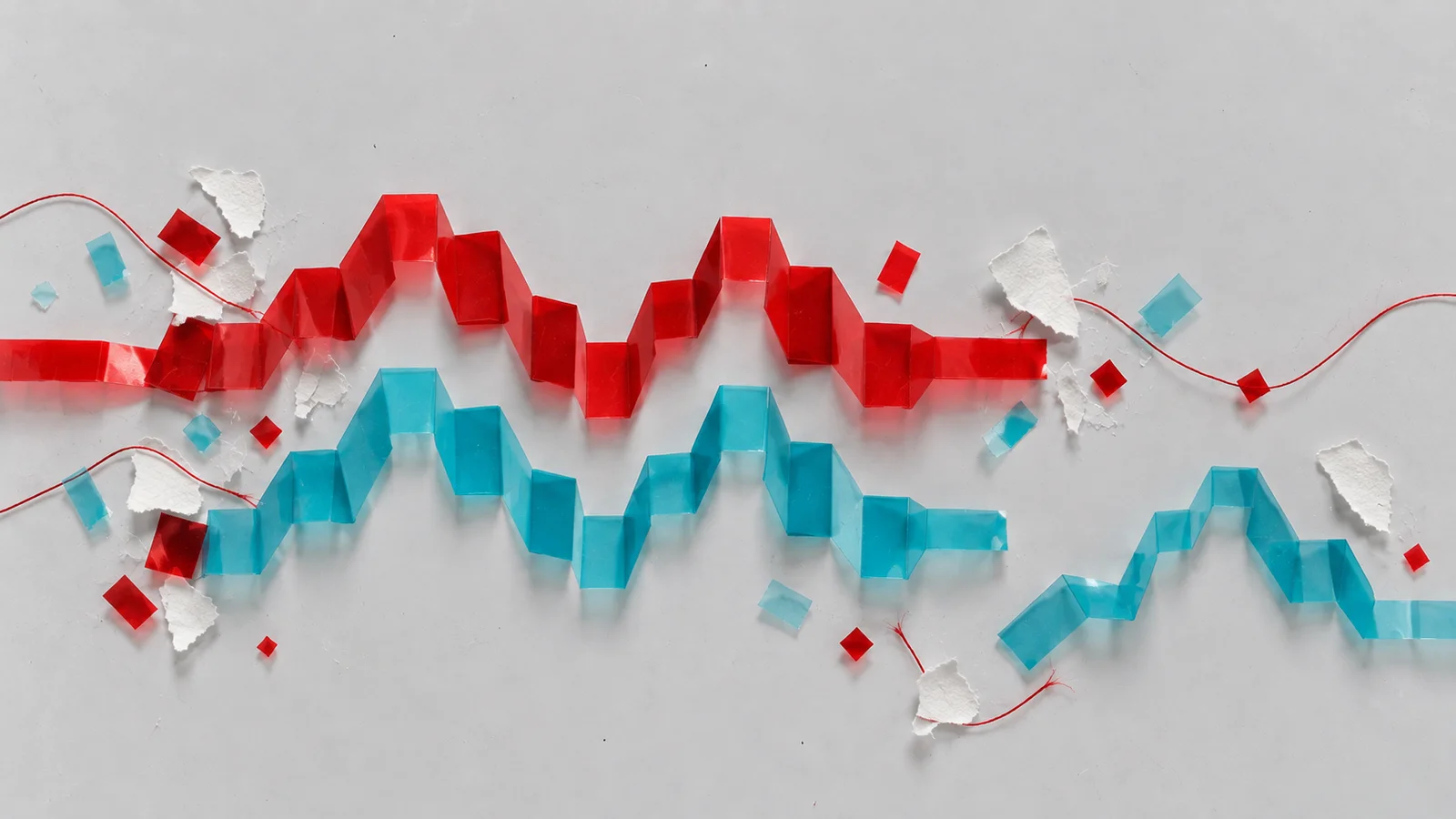
Press play. It's a piano, and every frequency in it has been moved up by exactly 90 Hz. You might expect a piano in a slightly higher key. What you get is stranger: the notes clang, go out of tune with each other, and the piano starts to sound like a set of bells or a broken music box.
If you shifted it by 3 Hz instead, would it still sound like a piano? What about 300?
Move Shift from 0 up to a few hundred hertz. At what point does the piano stop being a piano?
A piano that turns to bells
Solo Piano: Daniel Veesey, Public domain
Adding hertz is not the same as moving up in pitch
A note from a piano, a voice or a guitar isn't one frequency. It's a stack of them, called partials: the note you name, plus partials at (very nearly) two, three, four times that frequency and so on. A low A at 110 Hz has partials at 220, 330, 440 Hz and up. Because they're all whole-number multiples of 110, your ear fuses them into one note with one pitch.
Moving a note up in pitch multiplies every partial by the same amount. Go up an octave and 110, 220, 330 become 220, 440, 660, still neat multiples, still one note.
A frequency shifter adds instead of multiplying. Shift that A up by 50 Hz and 110, 220, 330 become 160, 270, 380. The gaps between them are the same, but 270 isn't twice 160 and 380 isn't three times it. The partials no longer line up as one note, and your ear hears a cluster of tones that don't quite belong together. That's the clang.
Same spacing, broken multiples
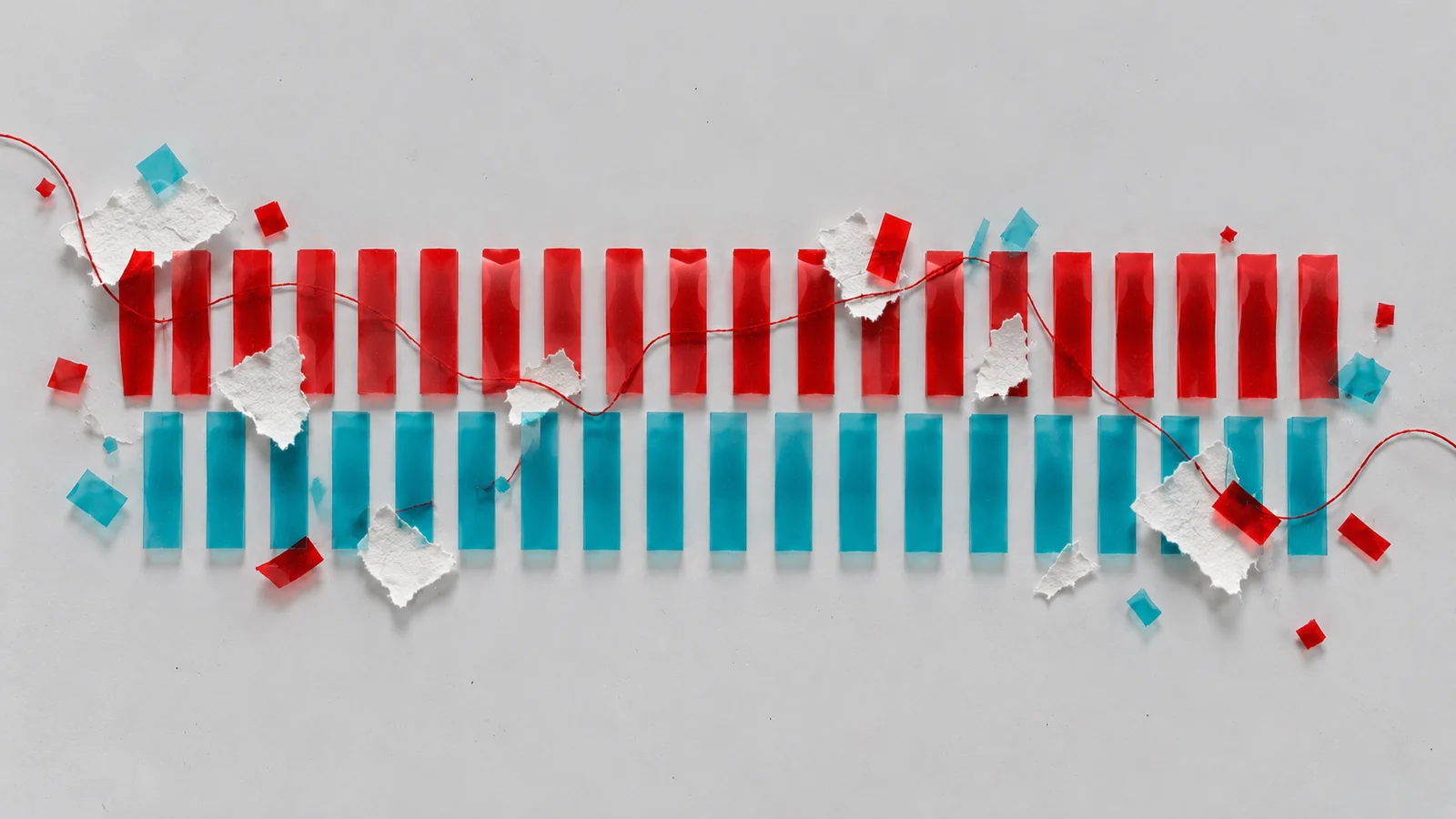
Here's the same piano moved the ordinary way, up three semitones. Same melody in a new key, and still very much a piano.
Compared with the shifter above, what stays the same when every partial is multiplied instead of added to?
The same piano, moved by a ratio
Solo Piano: Daniel Veesey, Public domain
The difference also explains why the frequency shifter changes character from note to note. Fifty hertz is a big fraction of a low bass note and a tiny fraction of a high one. So low notes get mangled and high ones only lean a little out of tune. A pitch shifter treats every register alike.
Small shifts: slow shimmer and swirl
Go back to the first lab, put Shift at 1 to 5 Hz and bring Mix down to about half. Now every partial sits right next to a copy of itself a few hertz away, and the two drift in and out of step. You hear that as beating: a slow, rolling swirl through the whole sound, something like a phaser but with no fixed pattern of notches.
This is one of the oldest uses of the effect, made famous by the frequency shifter Harald Bode designed in the 1960s: a gentle, endlessly moving shimmer that never settles. It's lovely on pads, electric pianos and drum rooms, and it keeps the original tuning anchored because the dry sound is still there.
Ring modulation: two copies, sum and difference
Ring modulation is the frequency shifter's wilder sibling. It multiplies the sound by a second tone, the carrier. For every frequency in the sound you get two new ones: the frequency plus the carrier and the frequency minus it. A 300 Hz tone ring-modulated by 100 Hz becomes 400 and 200 Hz, and the original 300 disappears.
The most famous ring modulator in history belongs to the Daleks in Doctor Who. The BBC Radiophonic Workshop put the actors' voices through one with a low carrier, and the result has terrified children for sixty years.
Slide the Carrier up from about 30 Hz. When does the voice stop sounding like a robot and start sounding like a bell?
Make a voice into a machine
Spoken Voice — Male: Peter Eastman (LibriVox reader 174), CC BY 4.0
With a low carrier, every part of the voice gets split into two copies very close together, and you hear a fast buzzing flutter: the robot. As the carrier rises, the two copies spread apart and no longer line up with the voice's natural partials, and the voice turns into metal. Bring the Mix down and the dry voice comes back underneath, which can make the words clear again while keeping the menace.
Ring modulation gives you both the sum and the difference. A frequency shifter is cleverer: it uses some phase trickery to cancel one of the two and keep only the sum (or only the difference). That's why a shifter can feel like a smooth slide up or down, while a ring modulator feels like the sound has been split in two.
Same idea, different place: FM synthesis also builds sidebands, pairs of frequencies above and below a note. Whether the ratio between the two oscillators is tidy decides whether you get a clean note or a bell, exactly as here. See FM synthesis.
Where it breaks
A frequency shifter does nothing interesting to a sine wave: it has only one partial, so there's no relationship to break. A sine shifted by 50 Hz is just another sine. Feed these effects sounds with lots of partials, like piano, guitar, drums and voices.
Big downward shifts have their own trap. Shift a low note down far enough and its lowest partials pass through zero hertz and fold back up again, landing in odd places. If the bass of your shifted sound turns murky or grows strange low tones, a smaller downward shift, or shifting up instead, usually cleans it up.
And on anything that carries the harmony, like a bass line or the main chords, a large shift will drag the song out of key. Use it on a layer, a transition or a texture, and keep a dry anchor.
Make it yours
Choose one of your own sounds, a keys part, a drum loop or a vocal, and make two versions. One for movement: a shift of a few hertz with about half dry, so it swirls but stays in tune. One for menace: a big shift or a ring-modulated version that you'd only use for a fill, a breakdown or a single word.
Keep the one you'd drop into a track tomorrow, and name it for its job: "drum swirl", "robot ad-lib". The same settings will sound different on every new source, which is half the fun.
Quick check
- You shift a bass line up by 30 Hz and it sounds out of tune, but the same shift on a flute line barely changes it. Why? Thirty hertz is a big part of a low note and a tiny part of a high one. A fixed number of hertz distorts low notes far more than high ones.
- You ring-modulate a 400 Hz tone with a 100 Hz carrier. Which frequencies come out? 500 Hz and 300 Hz, the sum and the difference. The original 400 Hz is gone unless you mix some dry sound back in.
- You want a vocal to shimmer gently without sounding robotic. Big shift fully wet, or small shift half wet? Small and half wet. A shift of a few hertz beats gently against the dry voice, which keeps it in tune and recognizable while it moves.
Next steps
- Go deeper: Vocoders and talking sounds. Ring modulation multiplied a voice by a tone. What if you multiplied a synth by the shape of a voice, band by band?
- Compare: Pitch shifting and correction. When you want a higher voice rather than a stranger one.