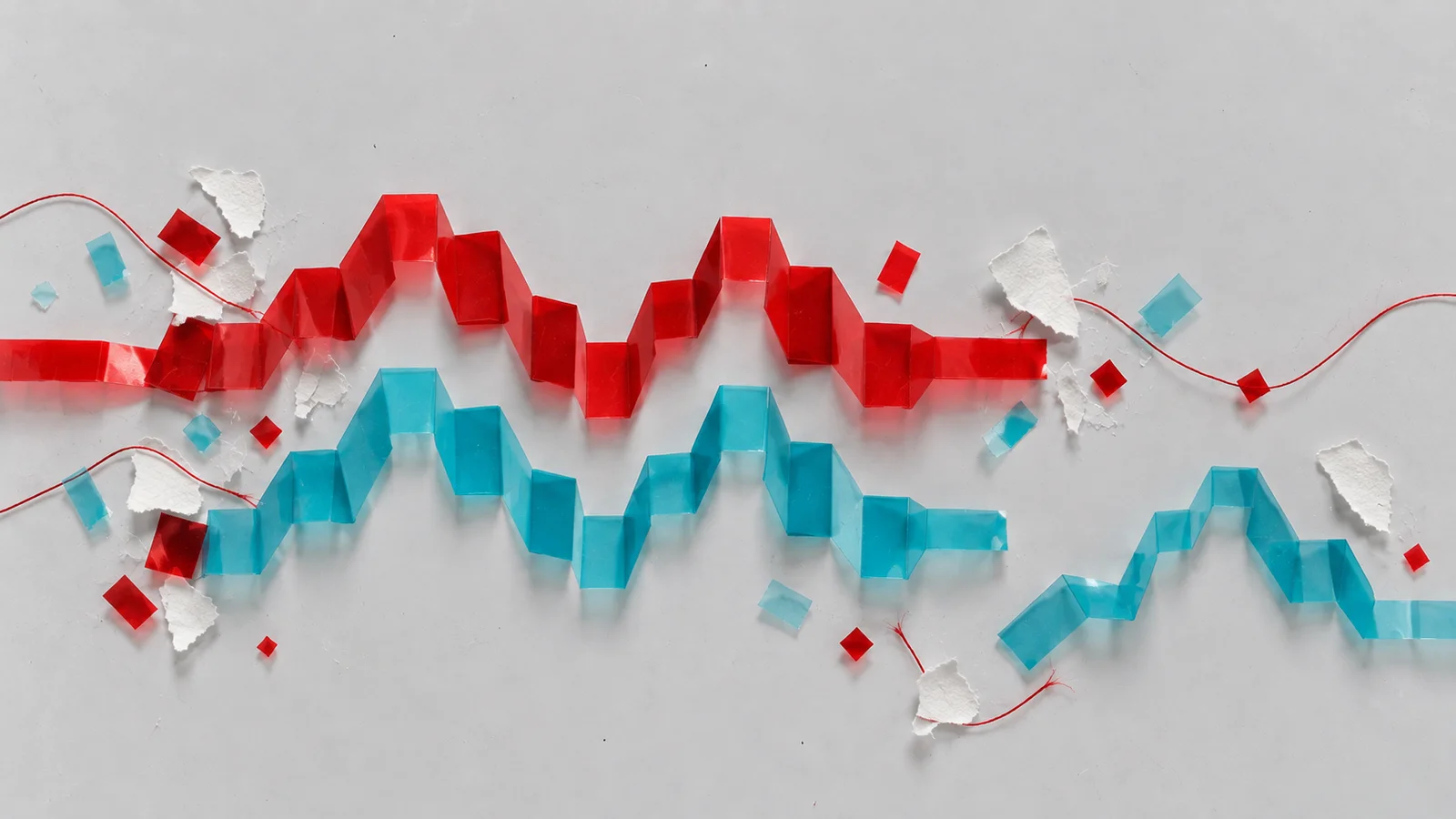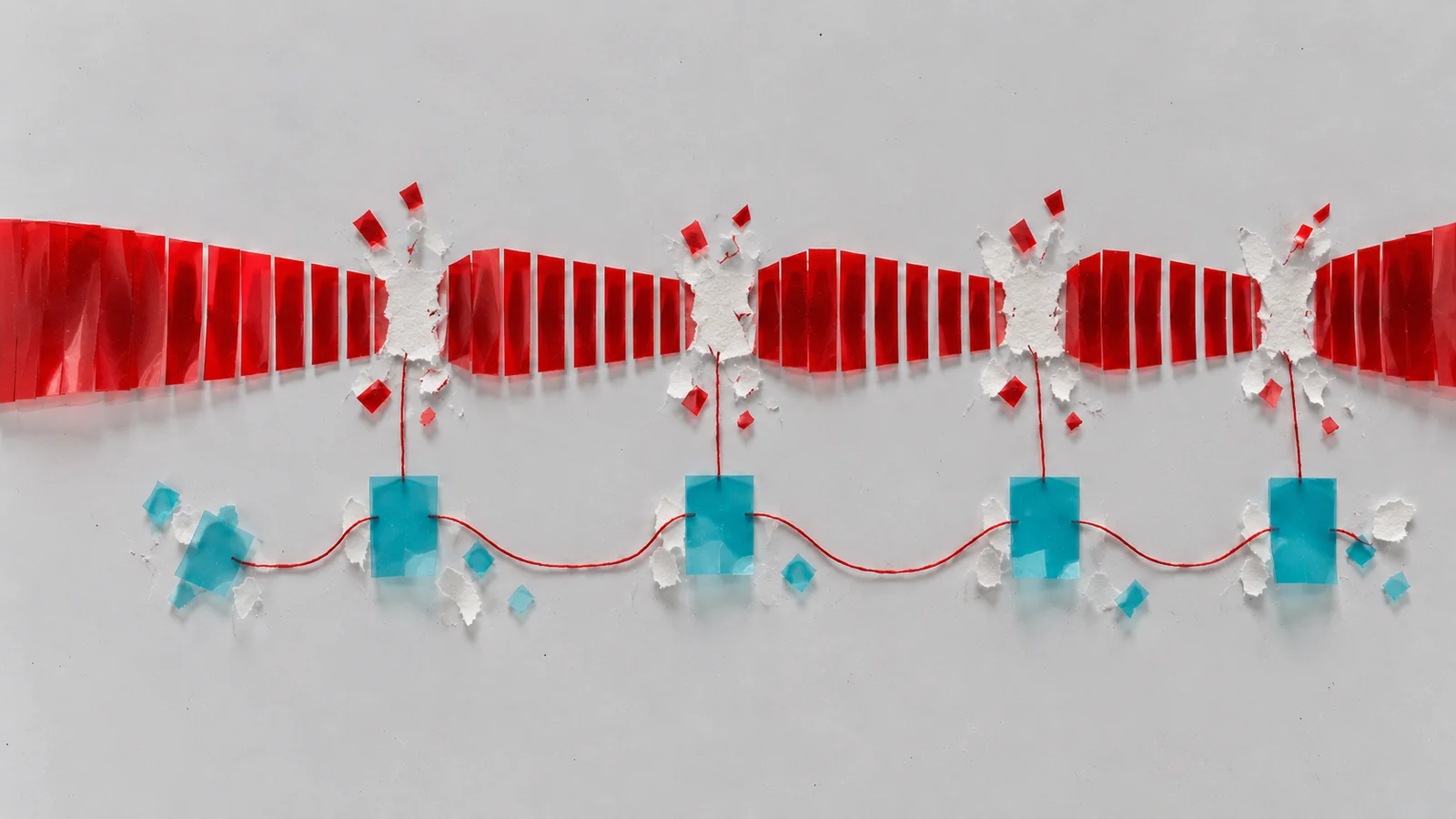
Listen to this pad. There's no drum anywhere in it, yet it breathes in time: it dips on every beat and swells back up in between, like the whole track is inhaling.
Before you press play, a question to keep in mind: if nothing in the pad itself is changing, what is the pad listening to?
The pad dips on every beat with no drum in sight. Raise Space for a deeper dip, then move Pocket. Does the swell feel tighter or lazier?
Who is the pad listening to?
Synth Texture: Komiku, CC0 1.0
The answer: a kick drum you can't hear. This effect has a kick pattern hidden inside it. The kick never reaches your speakers. It only tells the effect when to turn the pad down. That's the sound of French house and a lot of dance music since: pads, basses, sometimes whole mixes ducking out of the way of the kick, then rushing back.
Separate the ears from the hands
Every automatic level effect has two parts. The detector listens. The gain stage turns things up or down. Usually the detector listens to the same sound it controls. A sidechain gives the detector a different sound to listen to.
The key path
The kick's sound never mixes into the pad. What reaches the pad is the kick's shape, printed upside down: every time the kick hits, the pad dips. Turning one sound down because another one is playing is called ducking.
You've heard ducking every time a radio presenter talks over the end of a song and the music sinks under their voice, then rises when they stop. Same trick, different key.
The pad's level over one bar
Recovery is part of the rhythm
The dip is quick. The interesting part is the way back.
In the lab, Space sets how deep the dip goes and Pocket changes how the pad recovers, from a tight, snappy return to a lazy, laid-back swell. Move Tempo and the whole pattern speeds up or slows down with it.
Listen to when the pad gets back to full level. If it arrives just before the next kick, the bar feels like a breath in and out. If it stays down too long, the pad seems to vanish for most of the beat. If it snaps back instantly, the dip turns into a click. There's no right answer, only the one that suits your groove.
A gentle duck is useful even when you don't want an audible pump: a few dB of dip under each kick lets its attack punch through a thick bass or pad, then gives the space back.
Same idea, different place: Rhythm, meter and groove is about when events feel like they belong. A pad swelling back is an event too, even though no note was played.
A gate turns the gaps off
A gate is ducking's opposite: instead of turning things down when they're loud, it turns them off when they're quiet. Set a threshold; anything quieter is shut out, anything louder gets through.
The classic job is cleaning up drums: closing off the hiss, the hum, and the spill from other drums between hits. Try it on a drum kit:
Raise Threshold until the gaps go quiet. What do you lose if you keep going?
Shut the gaps
Drums and Cymbals: Steve Combs, CC BY
Bring Threshold up slowly. First the gaps get cleaner and the hits get tighter and drier. Keep going and the gate starts eating the quiet notes, the ghost notes and the cymbal tails. The gate can't tell a quiet note from noise. Level is the only clue it has.
A gate doesn't remove the noise under the notes
A noise gate removes noise between the notes. While a note plays, the gate is open and the noise under it comes straight through.
That can make things worse. On a hissy guitar take, a hard gate switches the hiss on with every note and off in every gap, so the hiss starts pulsing. Your ear notices a sound that comes and goes much more than one that sits still. Often a gentler setting, or leaving a little through with Mix, sounds more natural than total silence. Taking the hiss out from under the notes themselves is a different job, done by denoisers that work inside each note: Repair and restoration covers how they work and what they take with the hiss.
Give the note time to finish
A note fading out near the threshold wobbles above and below it, and the gate flickers open and shut: a stuttering, buzzy tail called chatter.
The fix is to make the gate move more gently. In the lab, Smoothing slows down how fast the gate opens and closes, so the tail fades instead of chattering. Other gates offer separate attack, hold and release controls, or two thresholds (one to open, a lower one to close) for the same job. Lower the threshold a touch and add Smoothing, then check the first hit is still crisp.
The most famous gate in pop
Put a big reverb on a drum, then gate the reverb hard so it's cut off a fraction of a second after each hit. You get an explosion of room that stops dead. That's gated reverb, the enormous, unnatural drum sound of the 1980s. The fill that crashes in late in Phil Collins's "In the Air Tonight" is the one everybody knows. A gate built to clean up noise became an instrument.
Where the trick breaks
Sidechain from a whole drum bus instead of the kick, and the hats and snare make the pad dip too, so it flutters instead of breathing. Feed the detector the kick alone.
And ducking isn't a cure for every low-end clash. If the kick and bass are fighting because they play long, heavy notes on top of each other, a duck hides the collision instead of fixing it. Try shortening the notes or changing the balance first. See Low end.
Make it yours
Gate it. Take a drum recording or a guitar take with noise between phrases. Raise the threshold until the gaps are clean, then back off until the quietest wanted note and the longest tail survive. If no threshold manages both, you've found the gate's limit, and editing out the gaps may be the better tool.
Duck it. In the pad lab, set the tempo to your song's. Make two versions: one that only makes room for the kick (shallow Space), one that pumps (deep Space). Decide where the pad should get back to full level relative to the next beat.
Open Gate or Pocket from the labs and save the one you like with a name that describes the feel: "Pad, breathes on the beat" or "Drums, tight gaps". Note where the recovery lands; that's the part that makes it groove.
Quick check
- After gating, you can still hear hiss under the guitar notes. Did the gate fail? No. An open gate lets the note and the hiss under it through together. It only quiets the gaps.
- A pad pumps in time with a kick you can't hear in the mix. Is the kick leaking into the pad? No. The kick only feeds the detector. All that reaches the pad is a level change, so the kick can be silent in the mix and still drive the pump.
- Your sidechained pad flutters on every hi-hat. What's the first thing to change? What the detector is listening to. Key it from the kick alone, not the whole drum bus, so only the kick makes it dip.
Next steps
- Use it: Sidechain pump. Build one deliberate pump and set its recovery against the beat.
- Go deeper: Limiting and loudness. Ducking turned things down when something else was loud. What if nothing is ever allowed past a line at all?