See a stereo signal from every angle.
Modules116
Six effects. Your order.
Guitarabin
$49 preorderA fixed pedalboard for spacious guitar.

Sparklizer
$39 preorderA stereo delay that shows each repeat as it moves across the beat.

Choose a chord. Strum the air.

Nine tuned steel notes, with no extra tenth note.
Examples87
Starting points you can copy into your own project, in Studio or with maru remix @maru/<slug>.
See a stereo signal from every angle.
Guitarabin
$49 preorderA fixed pedalboard for spacious guitar.
Choose a chord. Strum the air.
Nine tuned steel notes, with no extra tenth note.
A free instrument for playing layered sample libraries.
Catch the peaks. Keep the stereo image.
A synth controlled through a visual tuning display.
A complete open tape path for printing a signal.
Two oscillator banks with continuous frame morphing.

Bend echoes and space through a living prism.
Write music in Symbolic Cycle and hear it as MIDI.

A recording split into a playable grain cloud.
A channel vocoder for any live or recorded input.
A struck gong voice with a late shimmer.
Modelled bronze instruments with flexible tuning.

A 32-step Matrix, with ties, ratchets and a curve lane.
A clock-synced drum grid you can draw directly.
Separate, compare and play aligned audio stems.

Draw a melodic line on a clocked pitch grid.
A vocal tract you play like a synth.

The original time-based Granular instrument, kept playable.

Turn a lead sheet into a written practice session.

Six operators with an editable FM matrix.
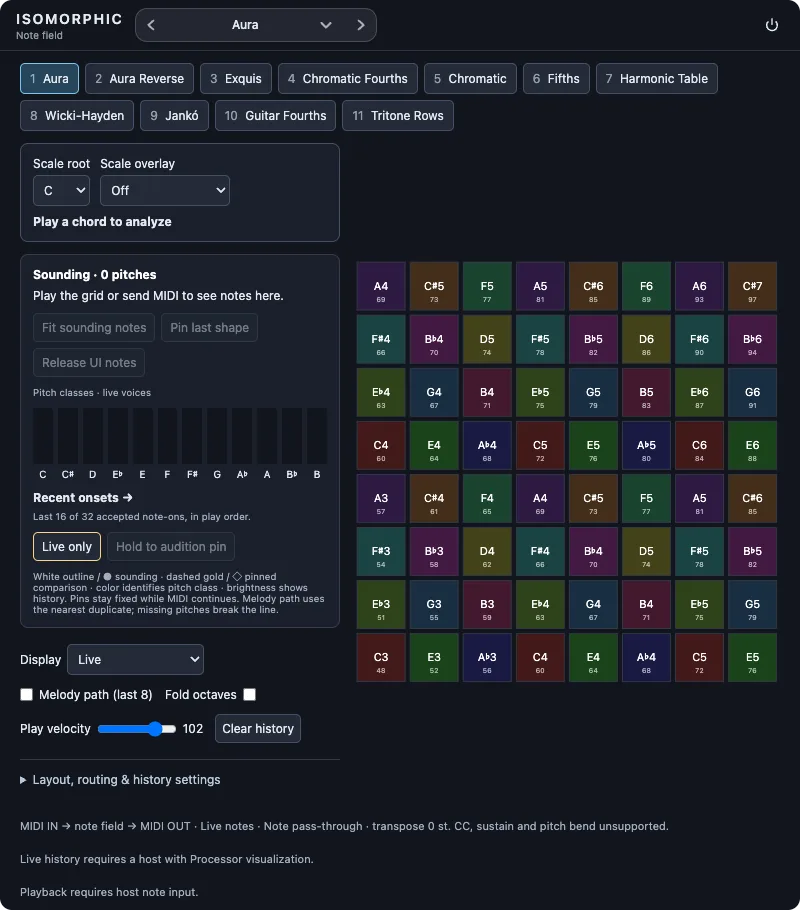
Play melodies and chords on interval-based note grids.
Six operators, thirty-two ways to turn motion into tone.

Map hand gestures to MIDI control.

A sixteen-pad drum machine whose whole kit morphs across three faces at once.
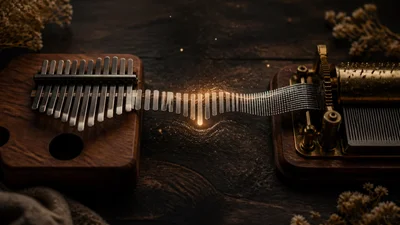
Two modelled tine instruments: kalimba and music box.
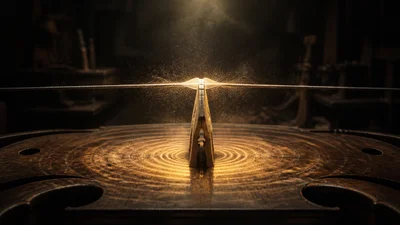
A physical string model, rendered per note.

Walk held notes through a rhythmic pattern.
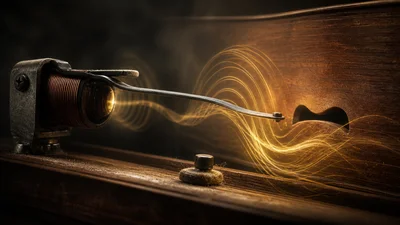
A pickup-position model for tuned tine voices.

A bell voice whose chord stays minor in any key.
Browse human drum performances and audition selected bar regions.
A step sequencer and arpeggiator on one grid.
A Synth1-inspired virtual analog instrument.
A sample-free drum synth with ten circuits and sixteen steps.

Generate a progression, then route or export its MIDI.
Map camera motion to MIDI CC.

Two synth voices. One expressive sound.
A full dynamics compressor with a filterable detector.
Live style transfer from catalog models.

Eurorack · 24 HP · Panel jacks
A resonant low-pass filter for shaping tone.
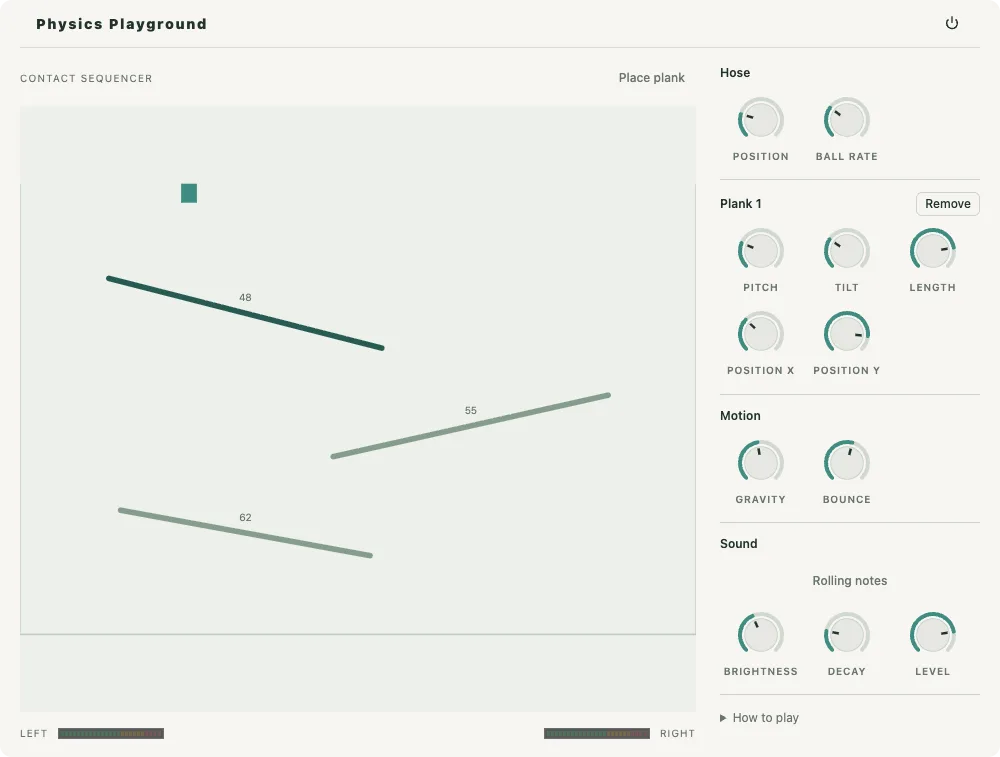
A physics sequencer: falling balls play tuned planks.
Eurorack · 28 HP · Panel jacks
A compact subtractive synth for learning the signal path.

A low-pass filter driven by an LFO.
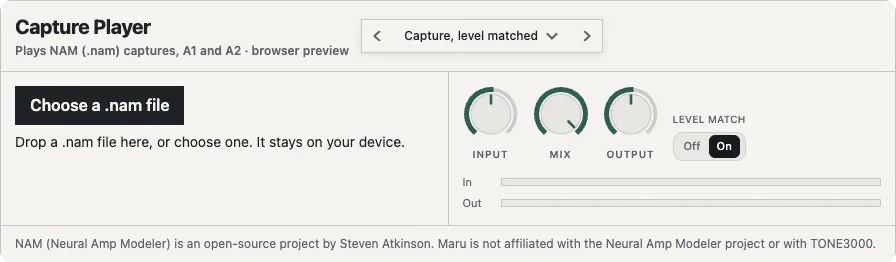
Play NAM captures, A1 or A2, in your browser.
A tonewheel organ with nine drawbars and no attack stage.
Pitch modulation from a modulated delay line.

Turn single notes into chords.

A four-operator FM keyboard with no filter.
Eurorack · 14 HP · Panel jacks
Shift notes while keeping held notes safe.

Shape, compress, or randomize note velocities.
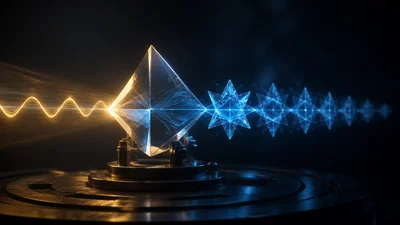
Choose the harmonic produced by the distortion.
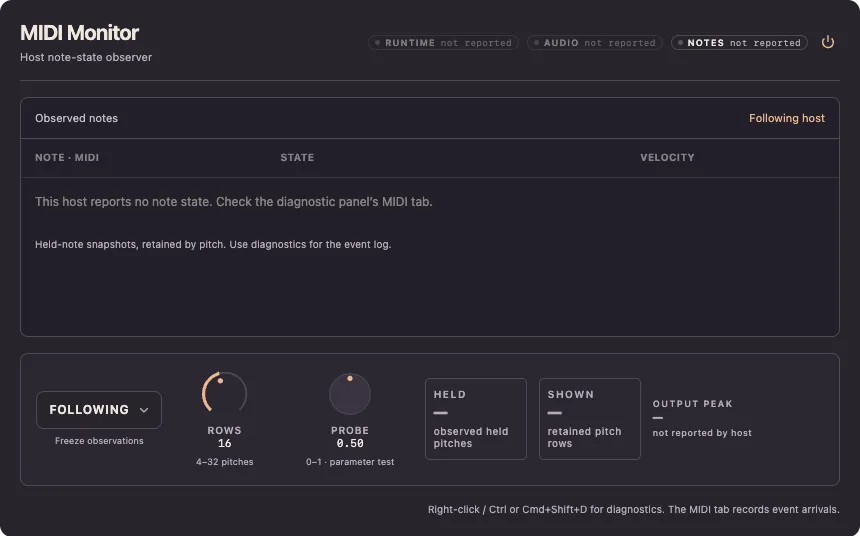
See the notes and controls reaching a module.
Move a signal across the stereo field.

A sawtooth ensemble with chorus.
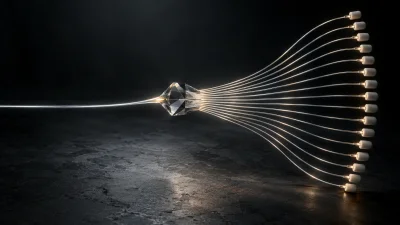
Send each MIDI channel to its own instrument.

Periodic amplitude modulation with stereo phase control.
Add timing and velocity jitter for human feel.
Shape a kick from pitch drop, body, click, and drive.
Two oscillators with independent pitch, level, and stereo position.
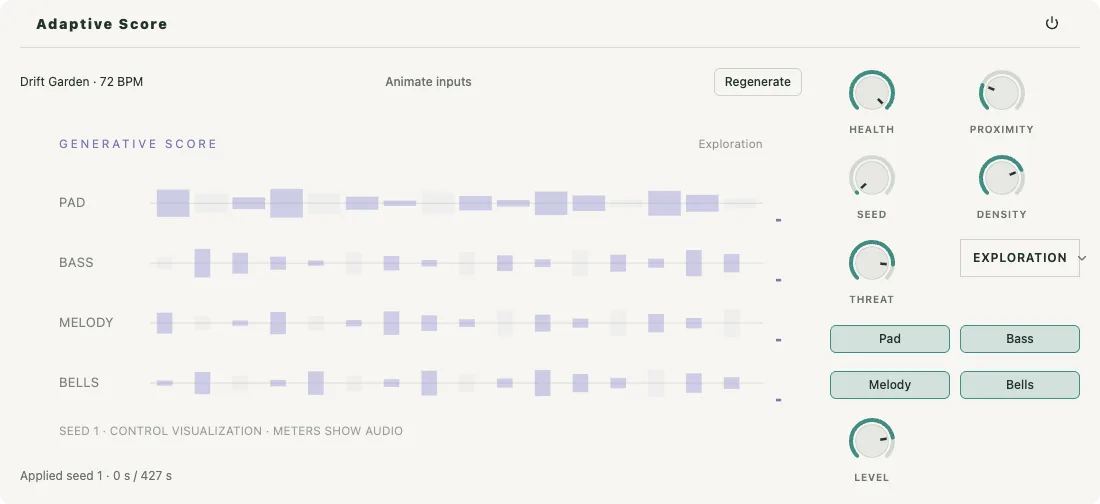
Let game inputs shape a four-layer score.

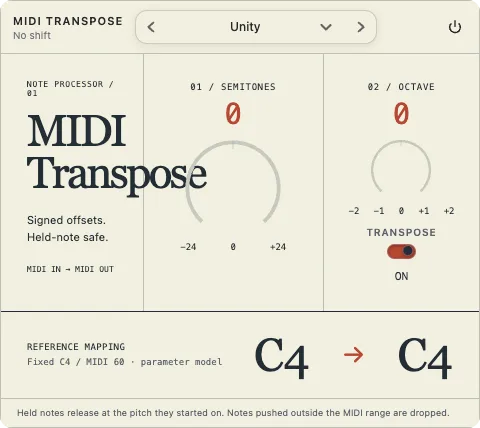
Transpose notes by semitones and octaves.
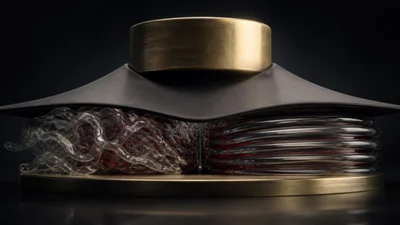
A compressor with visible gain reduction.
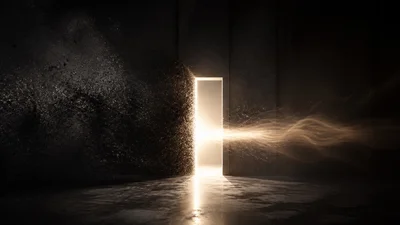
A noise gate with a clear threshold.

Play an nn_terrain surface through a RAVE decoder.
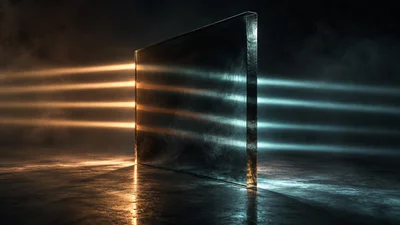
Shift every partial by the same number of Hz.
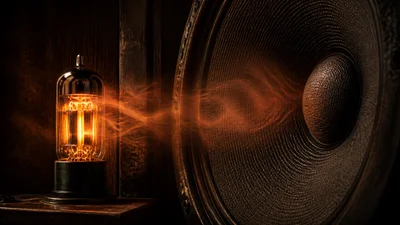
Tube-style drive into a real cabinet.

Add breath and attack to a voice.
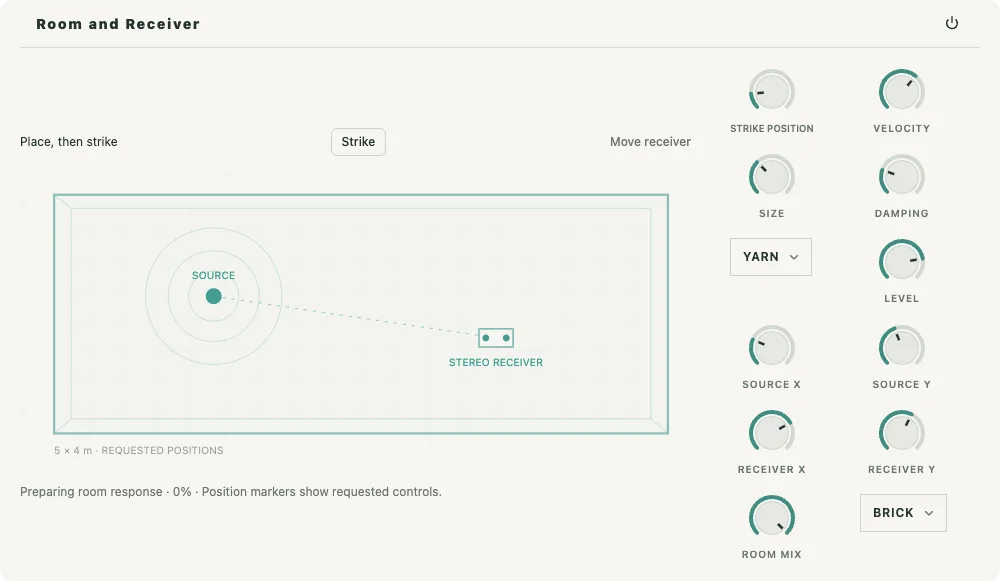
Move a source and receiver, then hear the room.
Cross-coupled delay with alternating repeats.
Three-band equalization with two crossovers.

A short modulated delay that widens one voice.
Bit reduction and sample-rate reduction for digital grit.
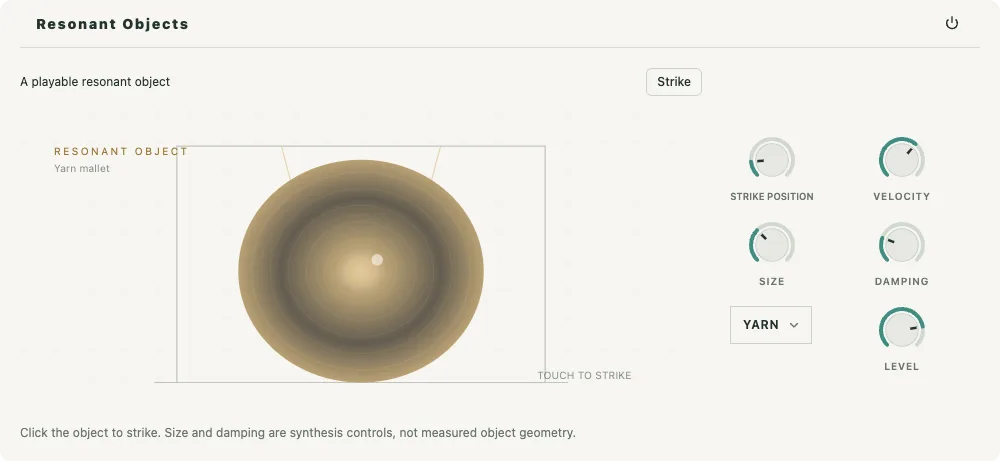
Strike and shape a resonant object.
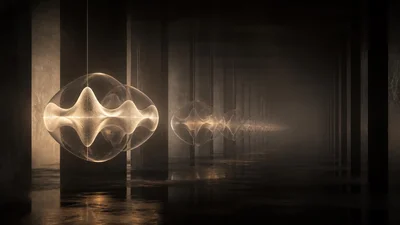
Eurorack · 18 HP · Panel jacks
A bounded feedback delay for repeats and ambience.

Adjust stereo width without changing the dry signal.
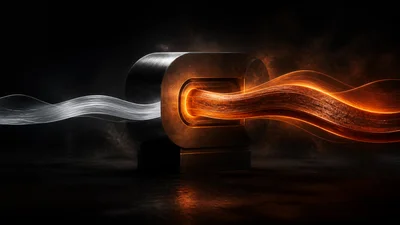
Add harmonics with a waveshaper.

Drive, tone, and bounded feedback delay.

Four controls for plucks, pads, and everything between.
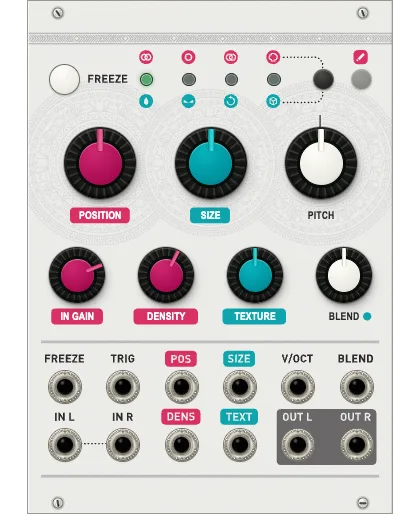
Eurorack · 18 HP · Panel jacks
Turn stereo sound into a granular cloud.
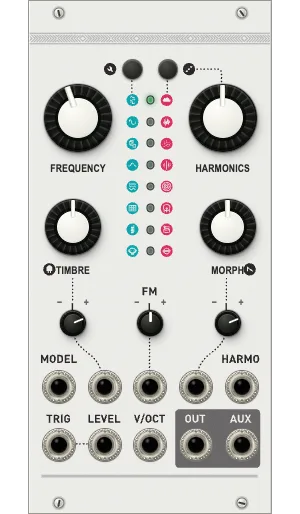
Eurorack · 12 HP · Panel jacks
A compact virtual-analog voice with patchable control.
Eurorack · 18 HP · Panel jacks
Algorithmic room reverb with bounded feedback.
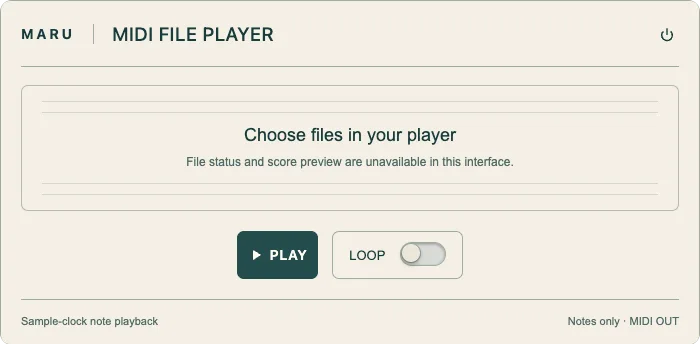
Play a MIDI file into a connected instrument.
A resonant filter driven by your playing level.
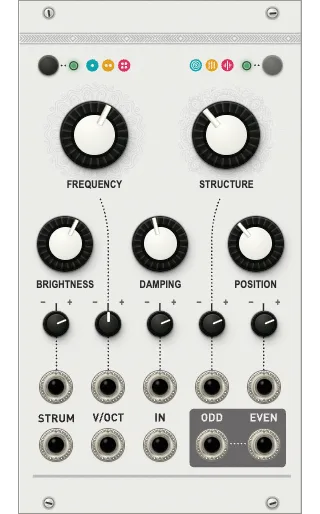
Eurorack · 14 HP · Panel jacks
Strike a resonator, then patch its shape and motion.
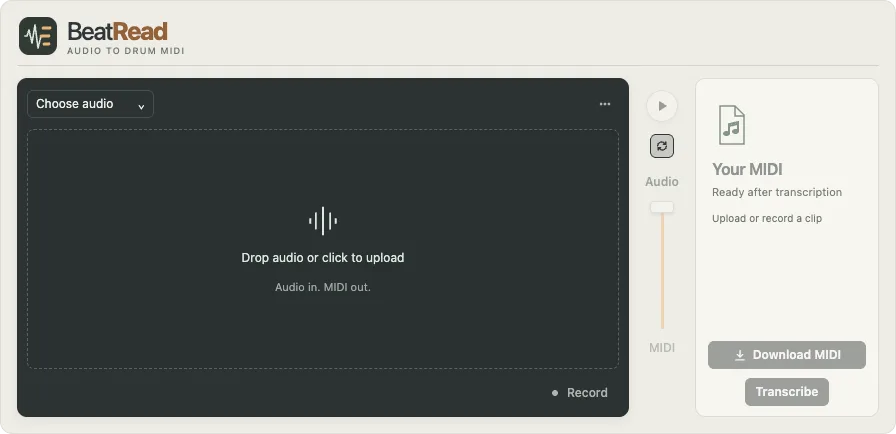
Extract a drum pattern from audio as MIDI.