You've EQ'd every track until it sounds great on its own. The keys are warm and full. The bass is fat and round. Then you unmute everything and the low mids turn to porridge: you can't hear what notes the bass is playing any more.
The bass is hard to hear. Will it help more to boost the bass, or to cut the keys?
The lab below holds both parts, one at a time, with an EQ already cutting a little out of the keys. Switch between the two sources first and listen to where each one lives.
Switch between keys and bass. Where does the keys' warmth sit on top of the bass's notes? How deep can you cut the keys there before they sound thin?
Where do they collide?
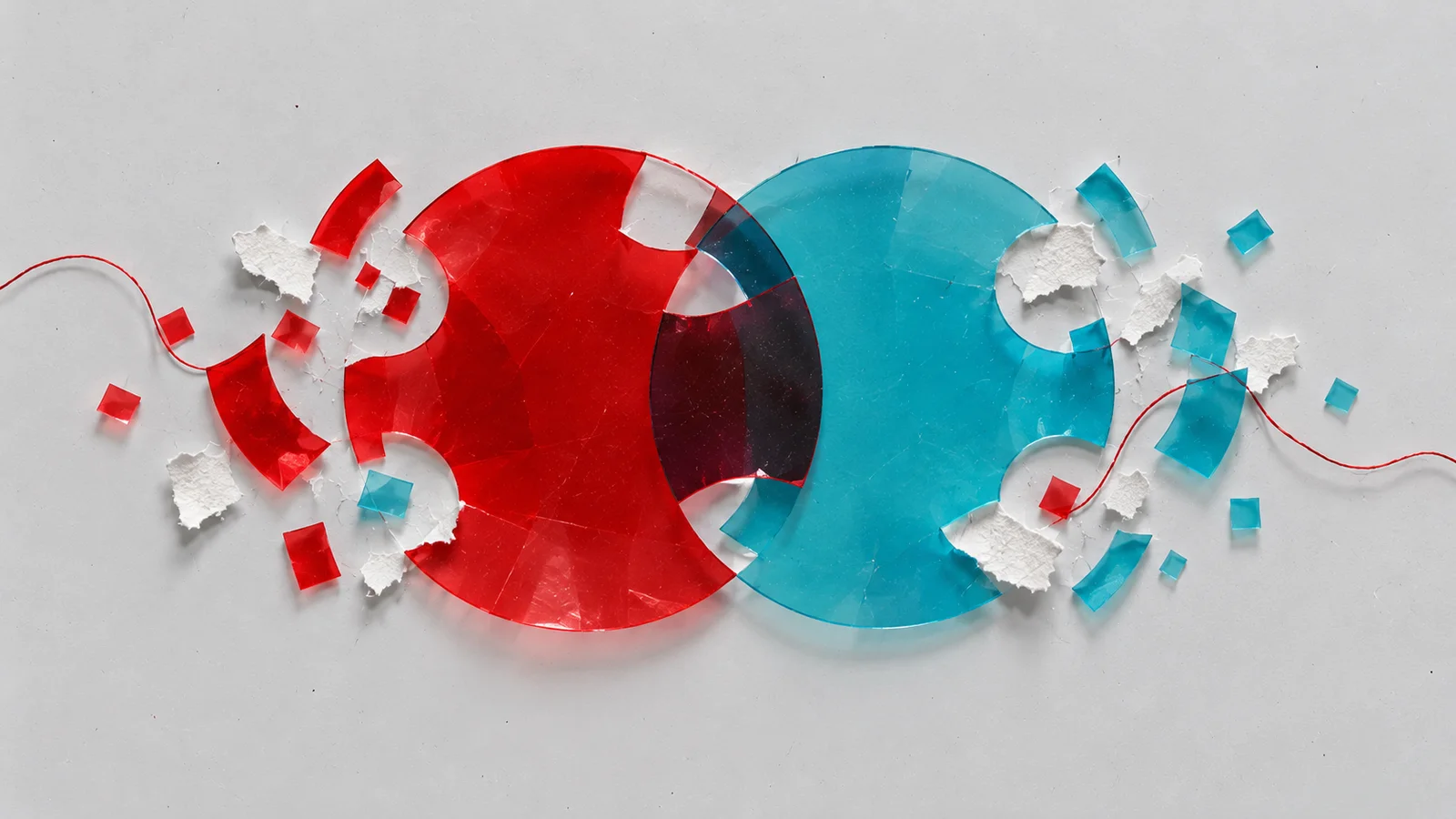
On the spectrum, the keys pile up most of their warmth between roughly 100 and 500 Hz. The bass has its deep weight lower down, below about 130 Hz. But listen closely: the part of the bass that tells you which note it's playing isn't the deep weight. It's the harmonics just above it, in that same 100 to 500 Hz zone. That's where the two collide.
Now sweep the cut on the keys. Somewhere around 3 or 4 dB, they still sound warm on their own. Push to 10 dB and they sound like they're coming through a phone. The sweet spot is the smallest cut that gives the bass its notes back.
Hiding in plain sight
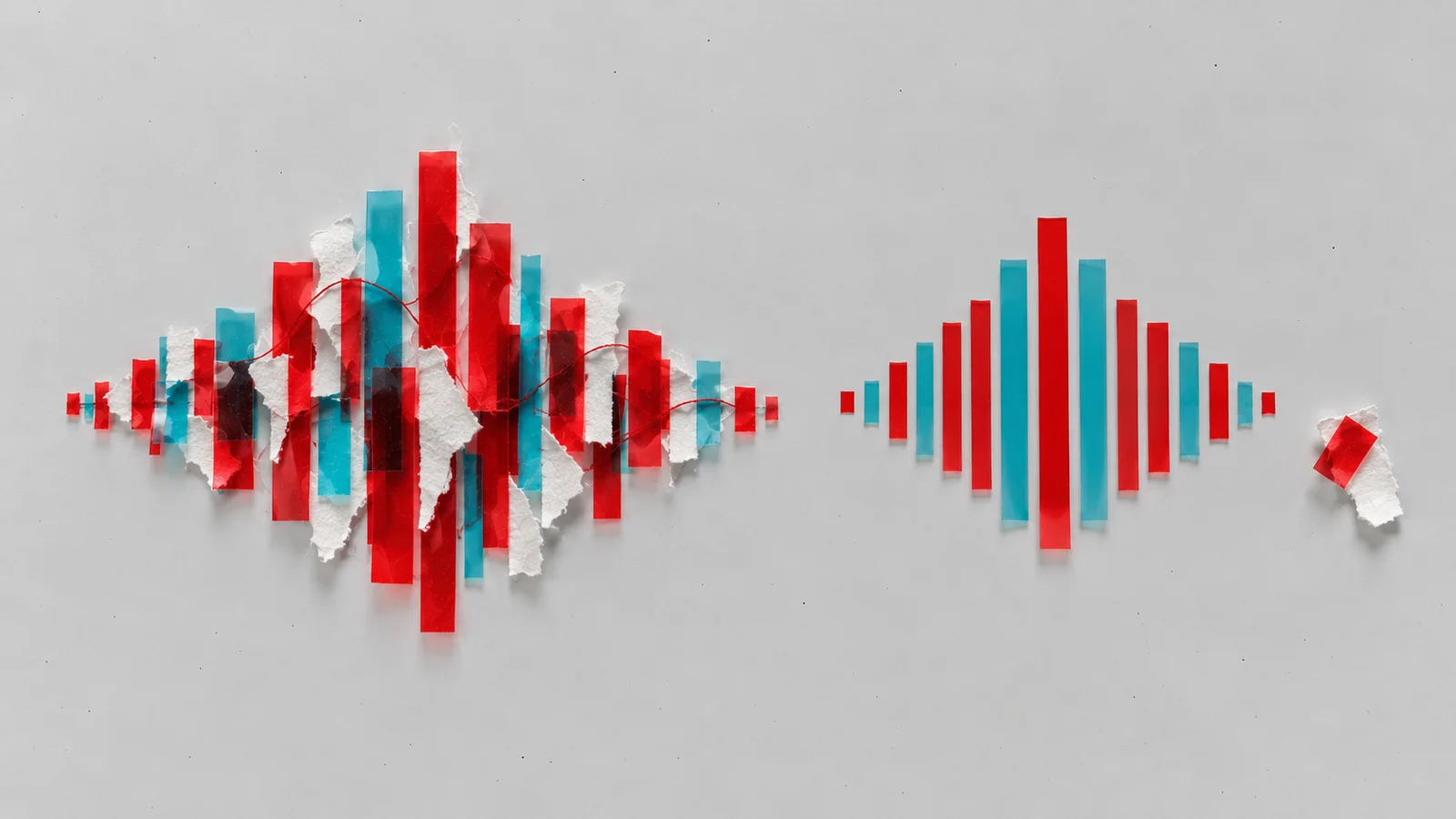
When one sound makes another harder to hear, that's called masking. It's not that the quiet sound disappears from the file. It's that your ear can't pick it out, because something louder is busy in the same frequency range at the same moment.
You know this from real life. A friend talking right next to you is easy to follow, until a bus goes past and fills exactly the range where their voice lives. Their voice didn't get quieter. It got covered.
In a mix, masking explains the mystery of "every track sounds great soloed, the whole thing is mud". In solo, nothing is competing. Each part is free to spread across the whole range, so you EQ it to fill everything, and it sounds gorgeous. Put them back together and they're all standing in the same spot.
Two parts, one shared region
Why cut the neighbour instead of boosting the star?
If you guessed "boost the bass", that's the natural instinct: the bass is the problem, so fix the bass. But a boost around 300 Hz on the bass makes the low mids even more crowded, adds level and eats headroom, and the keys are still sitting on top. A small cut on the keys clears the space instead. The bass doesn't need to shout; it just needs a gap to speak into.
You often fix the part you're listening to by changing a different part. The vocal sounds muffled? Look at the guitar. The snare has no crack? Look at the cymbals and the synth stabs around 2 to 4 kHz.
Cut versus boost isn't a rule, though. If the bass sound simply doesn't have enough upper harmonics to begin with, no amount of cutting elsewhere will give it note definition. Then a boost on the bass, or a brighter bass sound, is the right move. Try both, matched in level as in Listening and comparing, and keep the one that makes the bass easier to follow with the smaller side effect.
Before you reach for EQ
EQ is the third thing to try, not the first.
- Level. Pull the keys down 2 dB. If the bass comes back and the keys still do their job, you're done.
- Arrangement. Could the keys play their chords an octave higher, or leave out the left hand? Could the bass fill arrive in a gap rather than on top of a chord? These keep both parts sounding like themselves, which deep EQ cuts don't.
- Then EQ, small and specific.
How to find the spot
A bell band boosts or cuts a region around one frequency. Frequency sets where, Gain sets how much, and Q sets how wide (higher Q, narrower band).
A classic trick: boost a narrow bell by 6 dB or so and sweep it slowly through the part you want to cut, with everything playing. When the mud gets dramatically worse, you've found it. Now flip that boost into a gentle cut and widen it. Then the most important step: go back to listening to the whole mix, not the EQ curve.
Some EQs let you solo just the band you're touching. That's handy for finding a ring or a boom, but don't judge a cut by it. Almost any slice of a sound heard alone sounds ugly.
Masking moves around
A guitar might bury the vocal only in the dense chorus. In the sparse verse there's nothing to fight, and the same cut just makes the guitar thin for no reason. So always check a cut in both a busy and a quiet passage.
If they need different treatment, you've got options: automate the EQ or the level, change the arrangement in one section, or use a dynamic EQ, which only cuts when a band gets loud. The neatest version of this cuts the guitar only when the singer is singing. That needs a dynamic EQ that can listen to another track (a sidechain input), which not every EQ has.
Where it breaks: carving everything
Once you discover masking, it's tempting to give every part its own little slot: bass gets the lows, keys get the low mids, guitar gets the mids, and so on, each one cut away from all the others. On a spectrum analyzer it looks beautifully tidy. In your ears, every part sounds thin and the mix loses its body.
Overlap is often where the warmth and glue of a mix come from. Strings and pads should blend. Kick and bass should feel like one low end. Make the smallest cut that solves a problem you can actually hear, and leave the rest alone. If you've stacked several cuts on one part, bypass them all at matched level now and then, and ask whether each one still earns its place.
Same idea, different place: EQ makes room by giving parts different frequencies. Gates, sidechain and ducking makes room by giving them different moments: the bass ducks for a split second when the kick hits. Same problem, solved in time instead of tone.
Make it yours
Find two parts fighting in one of your own songs, ideally a vocal and a guitar or keys. Decide which one should be easier to hear. Try, in order: a level move, an arrangement change, then one gentle EQ cut on the other part.
Check the result in the busiest section and the sparsest one. If the cut helps the chorus but hollows the verse, automate it or try a different fix.
Open Parametric EQ and save the cut as a preset named after the pair, like "Keys under vocal, verse". Write one line on what it reveals and one on what it costs. Six months from now, when the arrangement changes, that note tells you whether the cut still belongs.
Quick check
- Your vocal is hard to understand in the chorus but fine in the verse. The chorus adds a big distorted guitar. Where do you look first? At the guitar, in the range where speech is most intelligible (roughly 1 to 4 kHz). Try lowering the guitar or a gentle cut there before boosting the vocal.
- Your analyzer shows the bass and the kick both have lots of energy at 60 Hz. Must you cut one of them? No. Overlap on a picture isn't proof of a problem. Listen first. If they sound like one solid low end, that may be exactly right. Cut only if you can hear one hiding the other.
- You cut 6 dB at 400 Hz on four different tracks. Each change helped. Now the mix sounds small. What happened? Over-carving. Each cut solved a local problem, but together they removed the low-mid body the song needed. Bypass them together at matched level and keep only the ones you'd really miss.