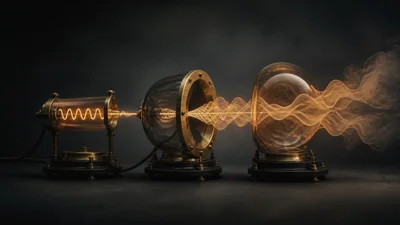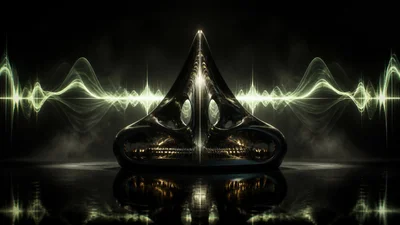
A two-oscillator synth tuned in just intonation, with a live oscilloscope at its centre. Pure intervals draw figures that stand still; tempered ones slowly turn. The picture is the tuning.
The idea
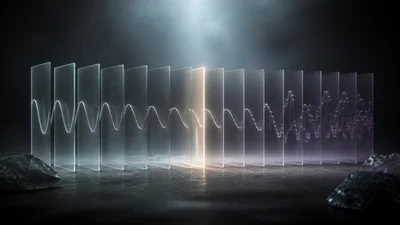
Feed an oscilloscope two tones and the figure only stands still when their frequencies are in a small-integer ratio. An equal-tempered fifth is not quite 3:2, so it draws a figure that slowly writhes. Just intonation is what makes the picture calm down, and that is why Oscillo is tuned the way it is.
So the second oscillator is not a second note: it is an interval. Set it to +7 semitones and it sits at exactly 3:2 above whatever you play, on every key; +4 is 5:4 and +12 is 2:1. Switch System to equal temperament to hear, and watch, what tempering changes.
Controls
- Osc 1: waveform (sine, triangle, saw or square), octave, detune in cents and level. Sine draws the cleanest figures; the other waves add harmonics that weave the trace. Any detune makes the figure rotate.
- Osc 2: on or off, waveform, Interval from −12 to +12 semitones, detune and level. A few cents of detune gives the classic slowly drifting figure.
- LFO: waveform, rate and depth, aimed at pitch (vibrato, up to ±60 cents), level (tremolo) or pan (a stereo sweep). The mod wheel controls LFO depth.
- Attack and Release fade each note in and out.
- Key sets the root of the just scale, C by default. System switches between just and equal temperament.
- Scope Phase, Scope Trail and Scope Glow change only the picture, not the sound.
- Level sets the output.
Oscillo plays eight voices by default, with Monophonic and Mono Legato modes, note priority and up to two seconds of portamento. It responds to MPE controllers.
Getting started
Play from a keyboard or MIDI and start with Pure Fifth, the still 3:2 figure the instrument is built around. Golden Third is 5:4 with a touch of saw, Octave Bloom a slow swell on the simplest figure, Tritone Web a deliberately busy one, and Unison Drift the classic slow rotation. Deep Siren is deep vibrato on a low fifth. Cathedral Fourth uses equal temperament, so you can compare it with the just presets by eye and by ear.