Hold two tones in a perfect fifth. Now change their tuning slightly while leaving the notes and sound otherwise alone. The interval still has the same name, but its movement and sense of rest can change.
Oscillo lets you explore that small difference through sound and a moving display. The point is to make tuning a choice you can investigate, rather than a setting you accept without listening.
Hear a fifth, then a third
The example starts with a fifth between two harmonically rich tones. Hold a note and switch System between just and equal. Keep the waveforms, volume, and display settings steady while you compare; listen long enough to notice slow movement.
Hear tuning change inside an interval
Oscillo
Compare just and equal with Interval at 7 for a fifth, then at 4 for a major third.
- System just
- Interval 7.00 st
Before changing Interval to 4 for a major third, make a prediction: will changing its tuning be easier or harder to hear? Try it, then move to another register. Listen for the motion inside the held sound as well as the pitches themselves.
Two meanings of a fifth
A pure fifth has a frequency ratio of 3:2. The upper tone completes three vibrations in the time the lower tone completes two. A pure major third has a ratio of 5:4.
Twelve-tone equal temperament takes a different approach: it divides the octave into twelve equal steps. That lets the same interval pattern work across keys, but most intervals differ slightly from simple whole-number ratios. Its fifth is very close to 3:2; its major third differs more noticeably from 5:4.
These are different ways to organize pitch. A simple ratio can be useful for a sustained interval; equal temperament makes moving among keys straightforward on a fixed-pitch instrument. Which relationship serves the music depends on the setting.
For a wider introduction to those choices, see Tuning systems in Learn, with comparisons between equal temperament, just intonation, and other musical practices.
Oscillo's second oscillator can follow an interval relative to the first, so you can make the comparison on different played notes. If you explore the just-tuned keyboard, choose its root with the phrase in mind: a tuning organized around one note will give different relationships when you change the center.
Why a small difference can matter
Nearby frequency components can create beating, a rise and fall in intensity. With harmonically rich tones, the partials, the frequency components within each sound, interact. A tuning change can alter that movement even when the difference in pitch seems small.
A sustained sound gives you time to notice it. A short, busy phrase may draw your attention elsewhere. The waveform and register also matter: the same interval on two different sounds can emphasize different aspects of the relationship.
For a useful comparison, keep the instrument sound steady and change only the tuning. You are listening for how the tones sit together, not trying to rank them as universally good or bad.
What the picture adds
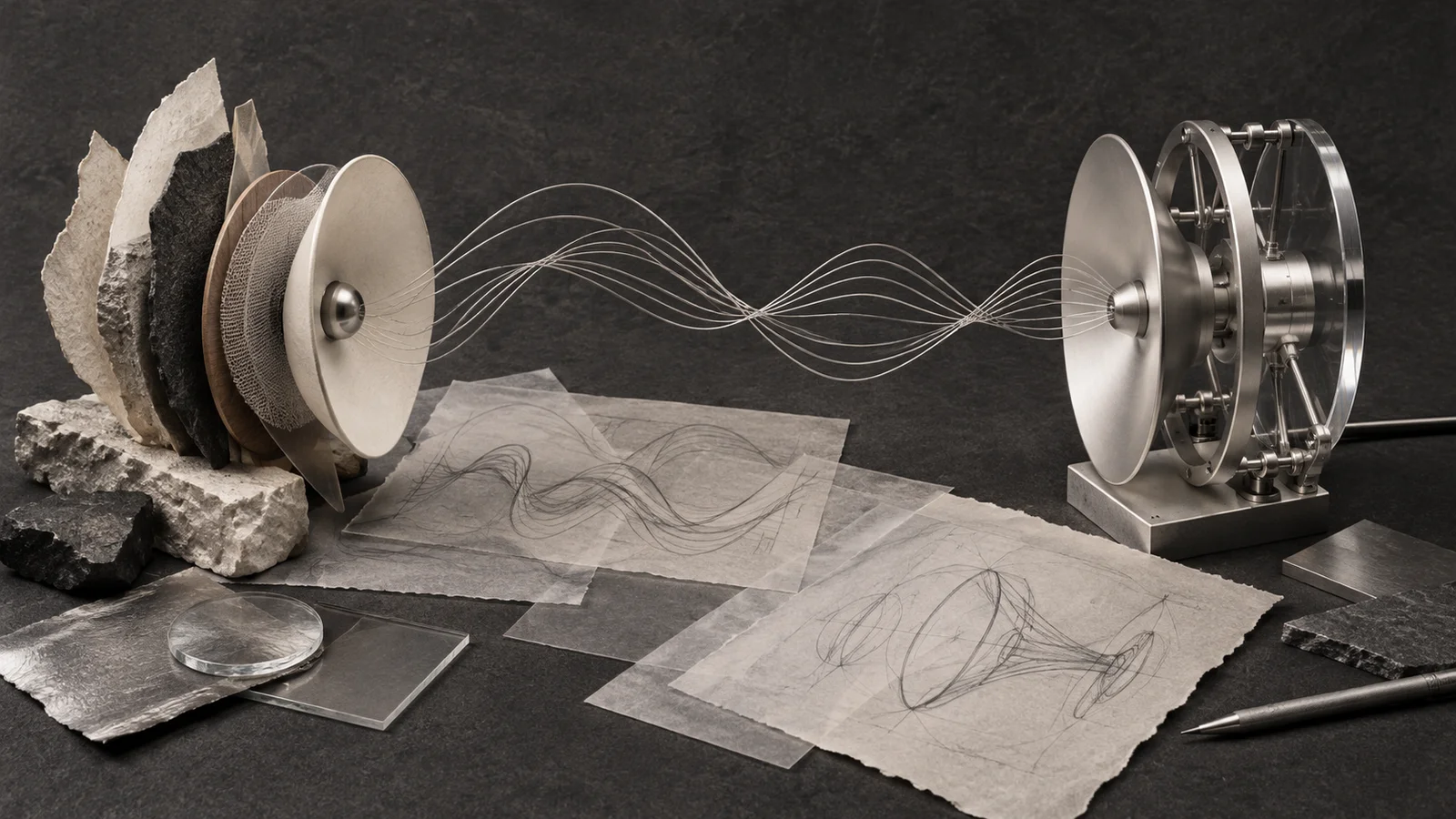
Oscillo's scope draws a looping figure from the sound. Repeating relationships can create a more settled pattern; small tuning changes can make the pattern move. This gives your eye something to follow while your ear learns the difference.
Keep the waveform and display settings steady while comparing tunings; they change the picture too. The shape helps you follow the sound's motion, while your ears decide whether that motion belongs in the music.
That distinction matters. A busy shape can accompany an interesting sound, and a stable shape can accompany a sound you have no use for. The display helps reveal a relationship; the musical judgment stays with you.
Tuning is part of composition
A tuning choice can encourage a different way of writing. You might leave two sustained notes exposed so their motion becomes part of the texture. You might choose equal temperament because the harmony moves through several keys. Or you might want the friction between tones rather than eliminate it.
The same interaction between nearby frequency components helps explain the shimmering paired tones explored in our Gamelan instrument. In each case, the movement can become part of the texture you write around.
Oscillo points toward a kind of instrument we want to develop further: one that helps you hear a relationship clearly enough to use it in your own music.
Try writing a short two-note part after the comparison. Decide how much motion you want between the tones, then choose the tuning and sound together. The useful result is a choice you can now hear.