A distorted guitar heard without a cabinet can sound startlingly harsh. Add a cabinet impulse response and the same part can become familiar: less exposed at the top, shaped through the mids, and easier to place in an arrangement.
The surprise is how much can change while the guitar part and distortion settings stay the same. An impulse response, or IR, gives you one captured perspective on a speaker. Choosing that perspective can reshape a familiar tone.
In the Amp Rig example, play the built-in guitar take and switch Cabinet off, then on. Keep Drive and Tone steady. Listen to the pick attack and the top end of the sustained sound; adjust the listening level if one version is louder.
Same guitar, different cabinet
Amp Rig
Start with the cabinet on. Compare Cabinet off and on, then try another IR while keeping the drive fixed.
- Cabinet On
- IR 4x12 Closed
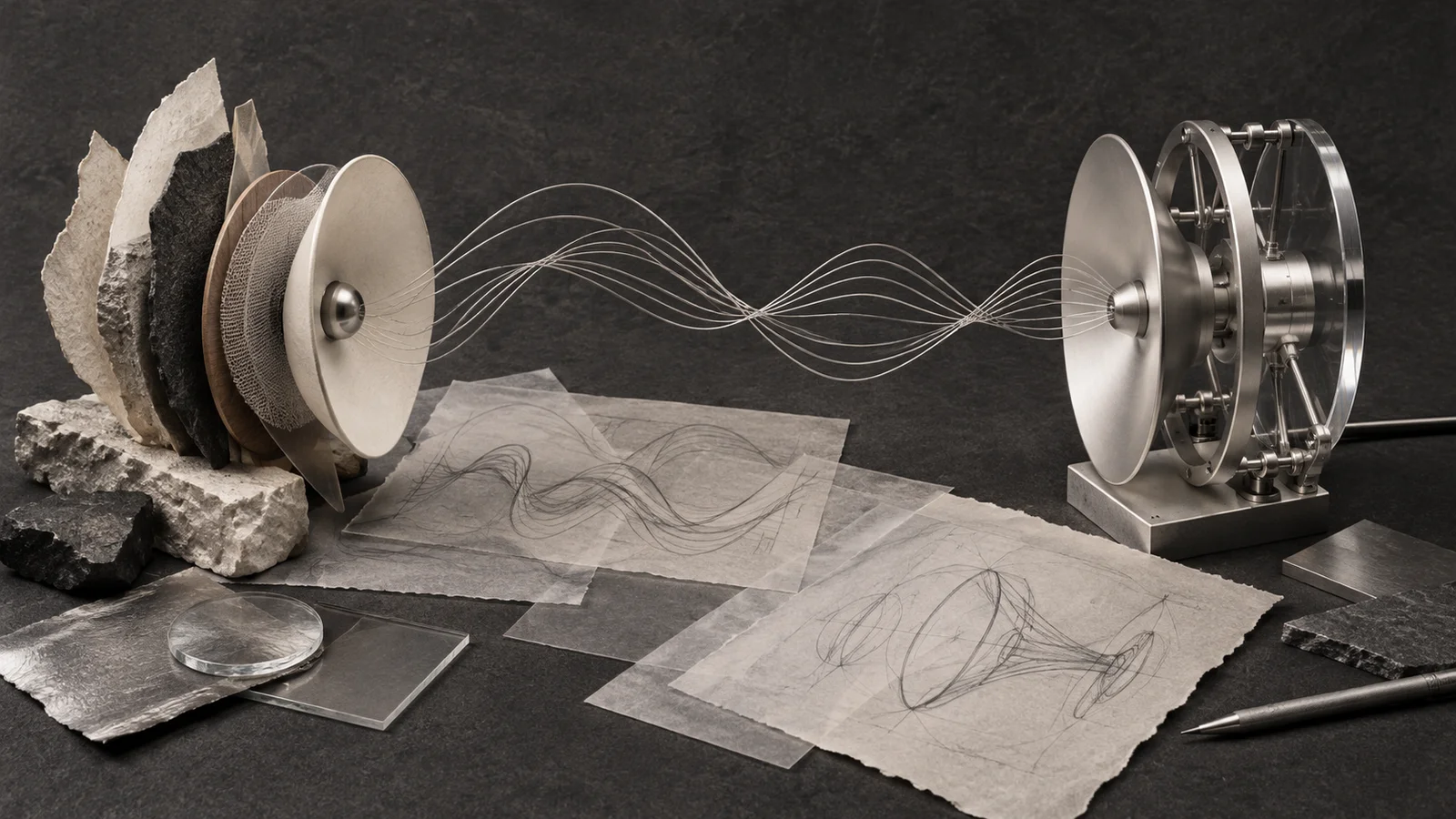
A recorded perspective on a speaker
For a guitar cabinet, the capture includes the speaker, cabinet, microphone, microphone position, and whatever room sound is retained in the recording.
Think of it as one recorded listening position. Two IRs made from the same cabinet can sound different because the microphone moved or a different mic was used. Neither has to be a more accurate version of the other; they describe different perspectives.
That makes the microphone choice part of your sound even when there is no microphone in your current room. Selecting an IR is closer to choosing how a cabinet was recorded than choosing a cabinet model in isolation.
What the capture keeps and leaves out
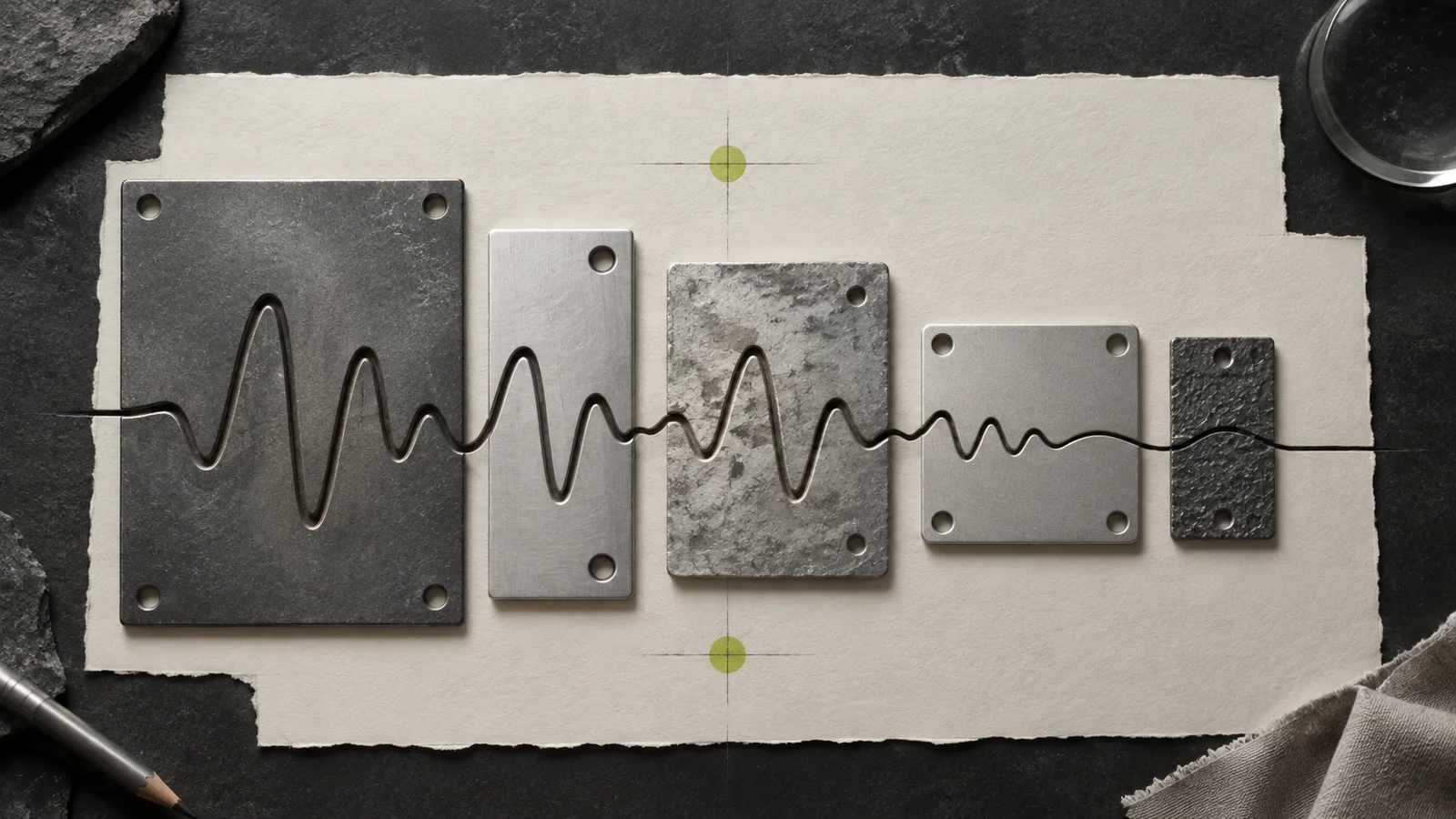
A cabinet IR stores the captured setup's response as a short audio file. An IR loader applies that response to your guitar, shaping its frequencies and decay. This process is called convolution.
An ordinary cabinet IR does not recreate every level-dependent behavior of an amplifier or speaker. Changing how hard you drive an amp is a different decision from changing the cabinet capture that follows it. The two stages work together.
Why the cabinet changes distortion so much
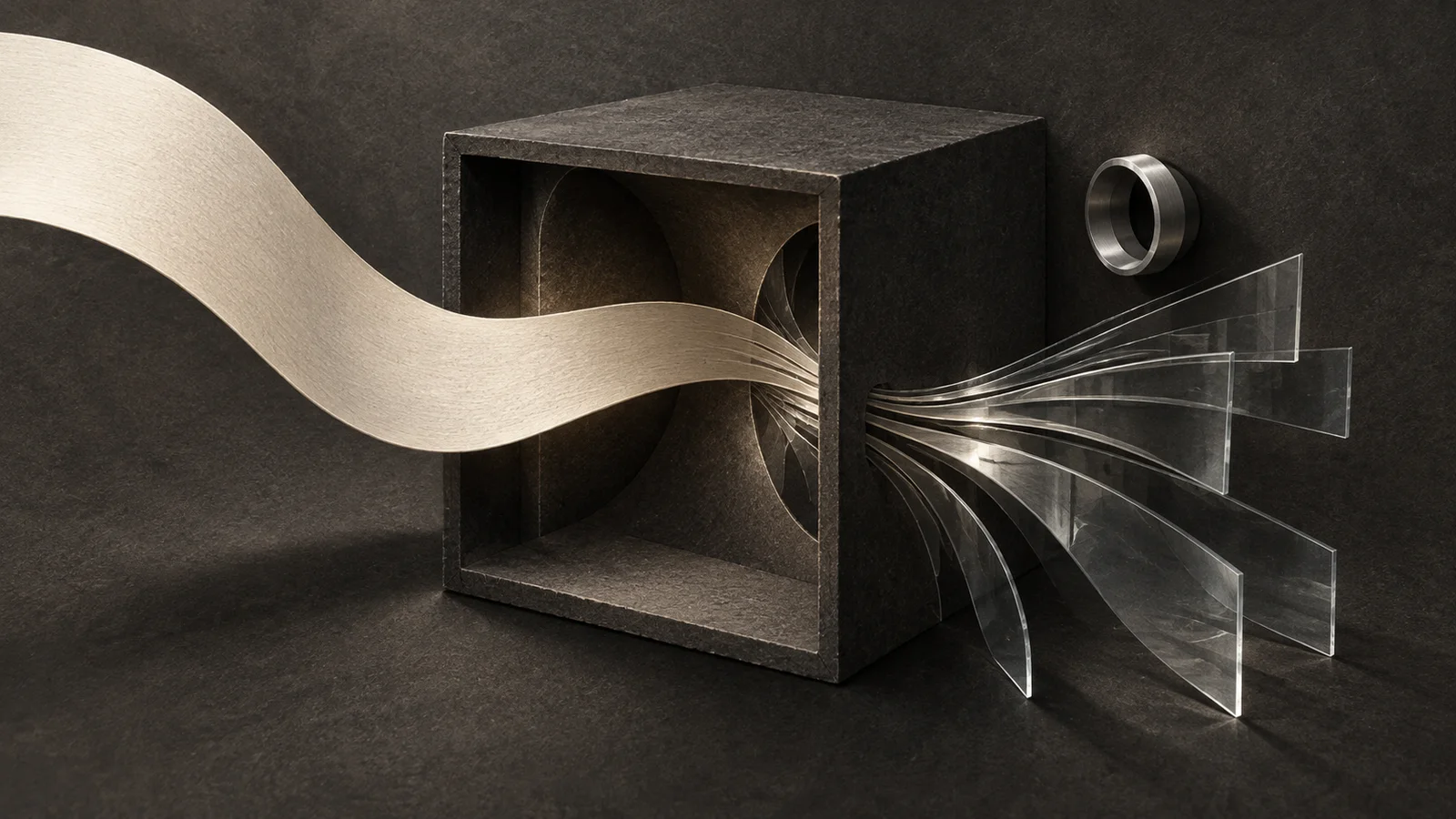
Distortion adds higher-frequency content. A guitar speaker strongly shapes that content, along with the low end and the resonances through the middle. The result is part of what we recognize as an amplified guitar tone.
Our Distortion and saturation guide lets you explore how drive changes a sound's harmonics. The cabinet then shapes the tone those harmonics help create.
If you judge an amp or distortion sound without its intended cabinet stage, you are hearing an incomplete chain. Conversely, a cabinet that sounds attractive alone may remove too much definition when the guitar sits beside a bass, cymbals, and a vocal.
This is why choosing an IR in the full arrangement can be more useful than scrolling through captures while playing solo. You are choosing a role for the guitar, not just a pleasing sound in isolation.
Compare one thing at a time
Record or loop a short phrase containing both a low note and a higher sustained note. Keep the drive and tone settings fixed, then compare two cabinet responses at matched listening levels.
Listen for three things. Does the low note leave space for the bass? Can you follow the attack without the top end becoming tiring? Does the sustained note retain the character you wanted from the distortion?
Choose a favorite with the guitar alone. Before adding the rest of the track, predict whether you will still prefer it beside the bass, cymbals, and vocal. Then hear the same comparison in context. A brighter capture may cut through at a lower level. A darker one may suit a sparse arrangement where the guitar has more room.
If you change the drive, EQ, IR, and output level together, it becomes difficult to know which decision helped. Keeping the phrase and level comparable gives your ears a clearer question.
Return to the drive
Use the example to compare cabinet choices, then make the same comparison on your own guitar part. The question becomes more specific once the part has somewhere to belong: does this capture help the guitar fit the track?
Once you hear the cabinet's contribution, return to the distortion setting. Does the drive you chose still give the sustained note the character you wanted? The capture and the distortion shape the result together; choosing either one gives you a reason to listen again to the other.