AvailableEffect

Chebyshev

Choose the harmonic produced by the distortion.

@maru shared this effect so you can play it in your DAW, remix it or put it on your site.

What it does

A stereo waveshaper whose one big knob is a harmonic number. Instead of asking "how much distortion?", Chebyshev asks "which harmonic?", and turns what you feed it into that harmonic.

The idea

Chebyshev polynomials have a tidy property: put a pure sine through the polynomial of order n and what comes out is the nth harmonic of that sine. Order 2 gives the octave above, order 3 the octave and a fifth, order 4 two octaves up. So moving the Order knob does not make the effect stronger, it makes it sound like a different interval.

That holds cleanly only for a sine. Real material has many partials, and each one is transformed at once, so on chords and rich sounds the higher orders turn into dense, bright, metallic grit rather than a neat transposition. Single sustained notes are where the harmonic character is easiest to hear.
Guide and controls

How it works.

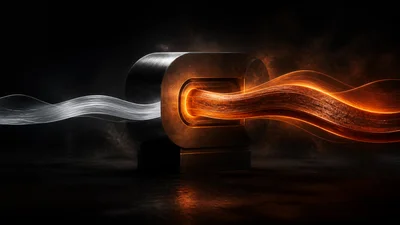
The Chebyshev polynomial of the first kind has one property that makes it useful here: Tn(cos θ) equals cos(nθ). Push a pure sine through the order-n polynomial and what emerges is the nth harmonic, alone and at full level. That is why Order reads as a harmonic number rather than as an amount, it is not choosing how hard to distort, it is choosing what to produce.

Even and odd orders behave differently, and the difference is audible before it is theoretical. An even polynomial is symmetric about the vertical axis, so it maps positive and negative input to the same output and rectifies the waveform, the fundamental largely disappears and the result sits an octave up. An odd one preserves the sign of its input, so the waveform stays symmetric, the fundamental survives underneath, and the added harmonic reads as colour on the original note rather than as a replacement for it.

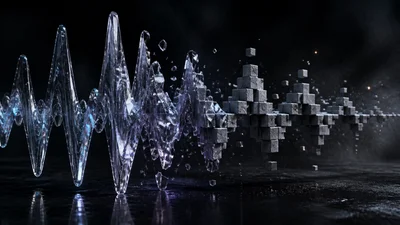
Real input is not a pure sine, and the clean harmonic identity does not survive it. Every partial in a chord goes through the same curve, and their sums and differences come with it, so what you hear at high orders is a dense inharmonic colouring rather than a tidy transposition. Single sustained notes are where the property is legible.

A high-order curve is extremely steep, order 50 crosses zero fifty times across the input range, which is exactly the shape that aliases badly at base rate. The browser preview runs the waveshaper at 4x oversampling for that reason, which is what makes the upper half of the order range usable rather than a wash of foldover.

What would you make with Chebyshev?

Describe what you want to make. Build it with the Studio agent.

Goes well with.

Building block

Add harmonics with a waveshaper.

Building block

Bit reduction and sample-rate reduction for digital grit.

Prototype

Drive, tone, and bounded feedback delay.